Pay in installments of $6.62 with
 ,
,
 and
and

Shipping Estimate
USA
- USA
- CAN
- USA
- CAN
Ships within 48 hours · Estimated delivery Jul 26 - Jul 31
 Promo Codes Available:
For Your Every Summer RSVP, with Code: SUMMER15
Description
gritty mix soil for succulents Molly's Gritty Mix for Cactus & BonsaiQuick answer: what is Molly's Succulent Mix? For: succulents, cacti, bonsai, Haworthia, Echeveria, Sedum, Jade, and any arid environment plant. What's in it: high mineral gritty blend of pumice, lava rock, and crushed bark. Low organic matter by design. Why it works: succulent roots are built to drink fast and dry out fast. The gritty structure drains in seconds and holds zero standing water, so roots don't rot. Pre rinsed and pH balanced straight
Quick answer: what is Molly's Succulent Mix?
- For: succulents, cacti, bonsai, Haworthia, Echeveria, Sedum, Jade, and any arid-environment plant.
- What's in it: high-mineral gritty blend of pumice, lava rock, and crushed bark. Low organic matter by design.
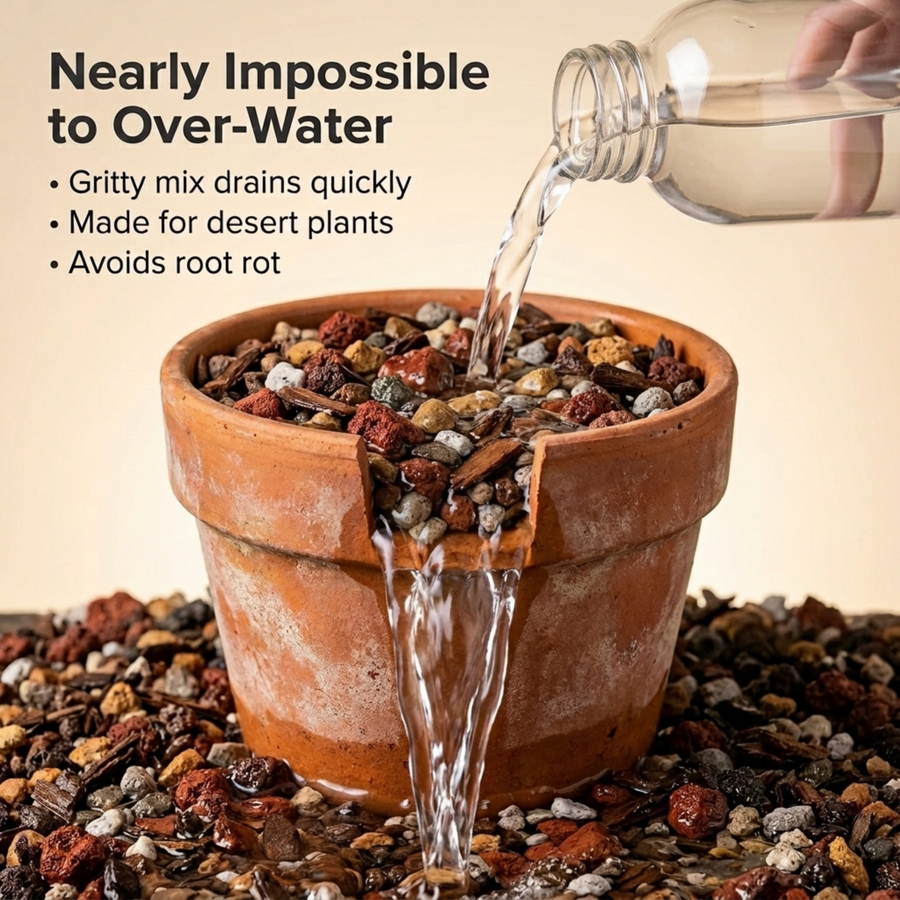
- Why it works: succulent roots are built to drink fast and dry out fast. The gritty structure drains in seconds and holds zero standing water, so roots don't rot.
- Pre-rinsed and pH-balanced straight from the bag. No salt flush required.
- Bonsai-safe. The grit profile matches what serious bonsai growers blend by hand from akadama, pumice, and lava.
More plant-specific guidance: Ultimate guide to growing succulents indoors, Potting soil vs potting mix.
Succulents and cacti evolved in arid, mineral-rich environments where water moves through gritty substrate in seconds. Their roots are built to drink fast and dry out fast. Standard potting soil holds moisture for days, suffocates the roots, and rots them from the bottom up. The fix is a high-mineral, low-organic, gritty mix.
Molly's Succulent Mix is engineered to mimic native desert and rocky-slope substrates. A blend of pumice, lava rock, and a small amount of organic matter that drains in seconds and forces the soak-and-dry watering rhythm succulents need.
The gritty-mix philosophy
Most "succulent soil" sold at garden centres is regular potting soil with sand mixed in. That's not what these plants want. The right mix is roughly 70% mineral aggregate (pumice and lava rock) and 30% structural organic (coir, charcoal). Water hits the surface and runs through within seconds. Roots get a brief, intense drink, then dry conditions for the next 1 to 2 weeks. That's how succulents stay alive in pots.
What's in the bag
- Pumice (volcanic, lightweight): the mineral backbone. Holds a tiny amount of water inside its porous structure, but lets the rest drain freely.
- Lava rock (red lava): chunky drainage and heat retention. Roots love the warmth differential it creates.
- Coir fiber (small percentage): just enough organic to retain a little humidity and prevent the mix from drying to a brick. Not enough to compromise drainage.
- Horticultural charcoal: filters salts from tap water (succulents are surprisingly sensitive to mineral buildup).
- Calcitic limestone (trace): buffers pH to the slightly alkaline range (6.5 to 7.5) most desert succulents prefer.
Low peat content, no worm castings (succulents don't want a nutrient flush), no commercial fertilizer. The whole mix is intentionally lean.
Plants this is for
Designed for succulents and cacti:
- Echeveria, Sedum, Crassula (jade), Sempervivum: the classic rosette succulents.
- Haworthia, Gasteria: they prefer slightly more shade but want the same gritty drainage.
- Aloe (vera and others): medicinal succulents, this mix prevents the rot they're prone to in heavier soils.
- Most cacti: Mammillaria, Echinopsis, Opuntia, San Pedro, golden barrel.
- Lithops (living stones): require fast drainage to stay alive year-round; this mix is well-suited.
- Bonsai with high drainage needs: juniper, pine, and certain deciduous bonsai work well.
- Caudex plants: Adenium, Pachypodium, and other swollen-stem species that need fast drainage at the base.
Not for: tropical "succulent-looking" plants like Hoya, Christmas cactus (Schlumbergera), or Easter cactus, which actually prefer humidity-retaining mixes. For those, use Molly's Aroid Mix.
Watering with gritty mix
The right rhythm: soak and dry. Water deeply, then wait until the mix is bone-dry before watering again.
- Wait until the top 2 to 3 inches feel completely dry. For most succulents in standard 4 to 6 inch pots, that's every 10 to 21 days indoors.
- Water until liquid runs clearly out the drainage holes. Don't dribble. Soak.
- Discard any water in the saucer. Do not let the pot sit in standing water.
- Wait. The plant will let you know when it's thirsty (slight wrinkling of leaves, lighter pot weight).
In winter, water roughly half as often. Most succulents go dormant or semi-dormant.
FAQ
Why is this so heavy compared to other succulent soil?
Because it's mostly minerals, not peat or coco coir. The weight is what makes it work. Light bag means light drainage, which is the opposite of what succulents need.
Can I use this for bonsai?
For tropical bonsai, no, they want a moisture-retentive aroid-style mix. For drought-tolerant bonsai (juniper, pine, certain deciduous species), yes, this mix or a 50/50 blend with finer organics works well.
Will the mix break down or stay porous over time?
Stays porous. The mineral components (pumice, lava rock, charcoal) don't decompose. The small organic fraction breaks down slowly. Most succulents in this mix can go 2 to 3 years before repotting.
Should I add fertilizer?
Sparingly. Succulents are slow growers and don't need much. A diluted (~1/4 strength) cactus-specific fertilizer once during the growing season (spring) is plenty for most species.
Packaged in a heat-sealed resealable bag. New formula released April 2026, see the formula release announcement for details on what changed.
Related care guide
Watering, light, and repotting fundamentals for succulents and cacti.
Have questions? Read the Molly's Succulent Mix FAQ for detailed information on watering, repotting, and which succulents this mix works best for.
New: the complete soil guide
Not sure if you need cactus soil or succulent soil? They are the same thing. Read: Best Soil for Succulents and Cactus →
Not sure which mix your plant needs?
Take our free 60-second Soil Finder quiz → Diagnose the problem and get the exact Molly's mix and amount for your plant, plus 10% off.
Shipping Notes
- Free Standard Shipping on $100+ Orders to the USA.
- Except Preorder products are shipped in 48 hours.
- Delivery to the USA:
- Standard Shipping : 3-10 business days
- If time is of the essence, please consider selecting expedited delivery for faster service.
Exchange/Return Notes
- We offer a 30-day return/exchange service after receiving.
- Final sale items are not eligible for returns or exchanges.
- To process your return/exchange, please contact us at [email protected]
- Please click here for more details>>> Return & Exchange Policy