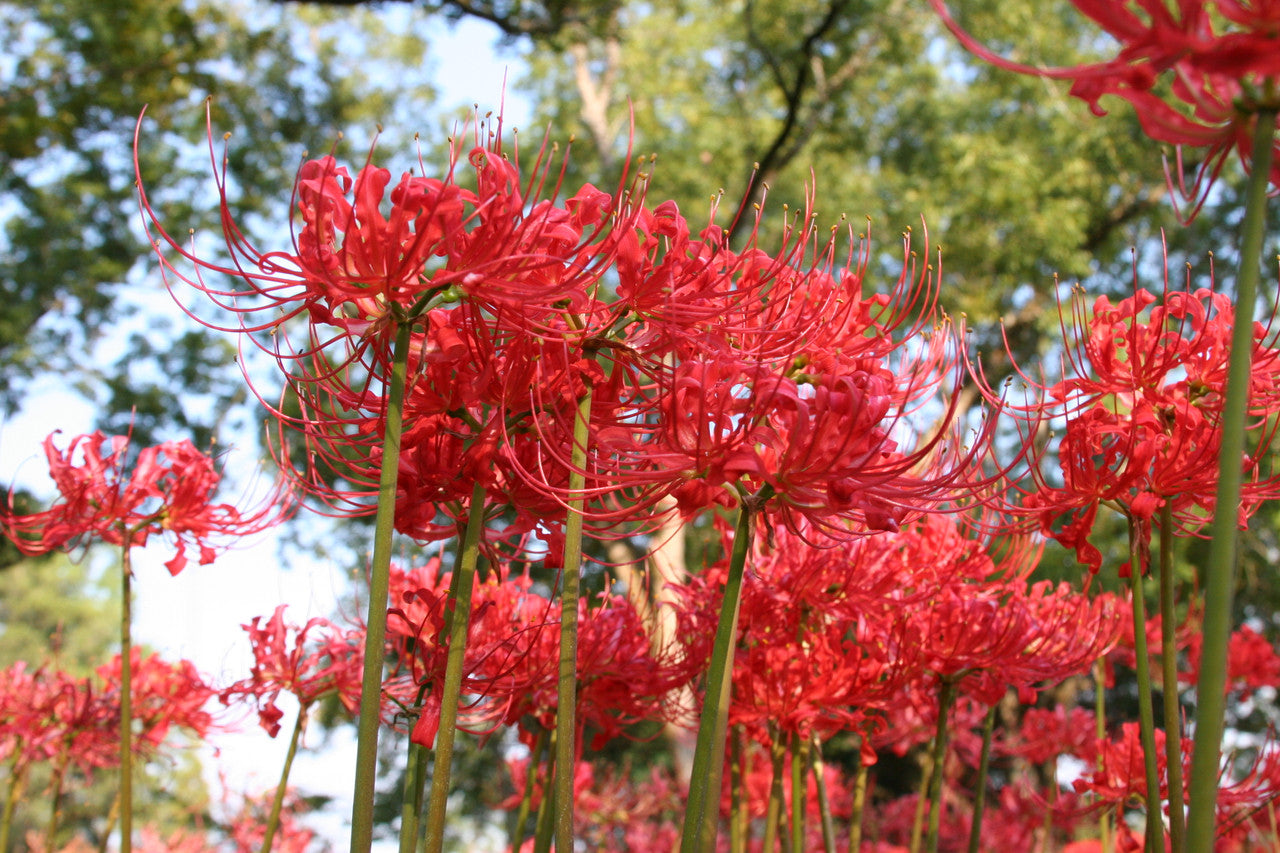
red spider lily order Red Spider Lily (Lycoris radiata) Southern Heirloom Triploid
SKU: 22628056451
red spider lily order

red spider lily order Red Spider Lily (Lycoris radiata) Southern Heirloom Triploid

Sale price$18.52 Regular price$20.58
Save 10%

Pay in installments of $5.14 with ShopPay, AfterPay and Klarna

Shipping Estimate
USA
  • USA
  • CAN

Ships within 48 hours · Estimated delivery Jul 3 - Jul 8

Promo Codes Available:

For Your Every Summer RSVP, with Code: SUMMER15

Description

red spider lily order Red Spider Lily (Lycoris radiata) Southern Heirloom TriploidRed Spider Lily (Lycoris radiata): A Gardener's Guide to the Enchanting Resurrection Flower Red spider lilies are beloved perennials that thrive in zones 7 10, bringing a burst of vibrant beauty to gardens when fall rains arrive. A Lily of Many Names: The Red Spider Lily's Regional Nickname: One of our favorite things about the red spider is its many names as you travel across the country. This also makes for interesting conversations with our

Red Spider Lily (Lycoris radiata): A Gardener's Guide to the Enchanting Resurrection Flower

Red spider lilies are beloved perennials that thrive in zones 7-10, bringing a burst of vibrant beauty to gardens when fall rains arrive.

A Lily of Many Names: The Red Spider Lily's Regional Nickname:

One of our favorite things about the red spider is its many names as you travel across the country. This also makes for interesting conversations with our customers to make sure that we are talking about the same flowering bulb. The names don't change the striking beauty of this fall-blooming flower. Here in East Texas, we call it the "red spider lily". It is red, and the stamens look like spider legs. Along the coast, it is often referred to as a "hurricane lily" because it often blooms after the first fall hurricane. Many people call this a "naked lady" because it blooms on a naked stalk. Others simply call it a "surprise" lily because it shows up out of nowhere and surprises you one day with a flower. No matter what it is called, its beauty will make you glad that you have it in your garden.

The Red Spider Lily's Unique Bloom Cycle: A Timeline

Understanding the Red Spider Lily's bloom cycle is key to successful cultivation. Most people still expect to see something growing during the summer months. You won't see anything. These lilies are dormant in the summer. The flowers suddenly appear with the first later summer or early fall rains. One day there is nothing growing and then suddenly you have a surprise, a fully blooming flower! That is why they are called "Surprise lilies". Yellow spider lilies act very similarly to yellow spider lilies, schoolhouse lilies, and naked ladies. Simply put, they bloom in the fall and then have foliage for the winter. I have spider lilies planted almost 2 years ago that have not yet produced blooms but have produced increasing foliage each year.

1. Planting (Anytime): Avoid hard freezes, but otherwise you can plant the bulbs anytime that you are thinking about them.
2. Dormancy (Summer): Bulbs rest underground, conserving energy.
3. Surprise Blooms (Late Summer/Early Fall): Flowers emerge seemingly overnight.
4. Foliage Growth (Fall/Winter): Leaves appear, gathering nutrients for the following year.

Nurturing the Foliage: The Key to Red Spider Lily Success

The foliage is vital for the bulb's health and reproduction. Don't be discouraged if you don't see blooms the first year – healthy foliage is a positive sign of bulb establishment. The foliage tells you the bulb is growing and multiplying. We know that we all want to see the beautiful unusual blooms in the fall, but the foliage is very important. The foliage is what allows the bulb to grow and multiply. Many people get very concerned if they don't see the spider lily bloom the first year that they plant it and believe that maybe the bulb isn't any good. The foliage is what you watch for if you don't see your spider lily bloom, or even if you do.

Below you will see a picture of the foliage of the red spider lily - it looks like grass. We took the picture on November 1st. The foliage has been popping out of the ground a little over the previous couple of weeks, but now you can really see the stand. All of those different tufts of foliage are bulbs, and someday you will see a beautiful stand of red spider lilies here. In this area because of the super dry summer, not one red spider lily bloomed. However, you can see that the bulbs are growing. The foliage is up and ready to take in nutrients over the next several months while helping the bulbs grow, mature, and multiply. I know you will have to take our word for it, but there wasn't even 1/2 that much foliage there last year which shows you how quickly the bulbs multiply. The foliage will continue to grow. Even if it gets hit by a winter cold snap, it will have taken in nutrients for months! Always allow the foliage to die down naturally and don't cut it off. If you cut it, you are killing the bulb. Once the foliage is completely dead which is usually around the beginning of May, this area can be mowed. Remember, it takes a lot of energy for the bulb to push that bloom up out of the ground and open wide. The more time the bulbs can take in nutrients, the more energy they will have for that fall bloom.

Sunlight Requirements: Ensuring a Spectacular Bloom

The single most important thing about landscaping with spider lilies is the sun. They need at least 6+ hours a day of WINTER sun. That means about 6-8 hours of sunlight during the winter months. If you look at the photo above, you will see that they are in the shade of the trees. You can be sure that most, if not all, of those trees, will lose their leaves in the winter when the greenery needs sunlight. The spider lily puts on its foliage during the winter (November - May) and that is when it takes in the nutrients it needs to produce those golden flowers the following September. The winter foliage soaks up sun energy during winter as it prepares for summer dormancy. The foliage normally completely dies down by around May.

Planting and Care Tips for Red Spider Lilies

Don't plant the bulb too deep. You will plant the bulbs 2-3 times deep the height of the bulb (so if your bulb is 2" tall, then you will plant it 4-5 inches deep). You can plant 2-3 per hole to make the blooms look more natural. Spider lilies really do well in any type of soil. They thrive in soil that has plenty of organic material mixed in, but they do not require fertilizer. Newly planted bulbs would actually be harmed by exposure to fertilizer, so if you are going to apply nutrients, limit the application to established plants when the plants are producing their green leafy foliage during the winter. After planting the bulbs, water the soil thoroughly. Damp soil is ok, as long as the bulbs are in a spot where they will receive plenty of winter sun and the foliage is allowed to die down naturally in the spring. Standing water is not good. Once the summer season starts the spider lily will do best in soil that dries out a bit, as this facilitates its entry into the dormant stage when its leaves die back. This period is followed by its blooming season when it will reward daily watering with long-lasting blooms. Too much moisture in the soil will lead to the bulbs rotting.

Planting Depth: Plant bulbs 2-3 times their height deep.

Soil Type: While adaptable, they thrive in soil rich in organic matter.

Watering: Water thoroughly after planting and during dry periods. The bulbs are dormant during the summer so you don't need to water them.

Fertilizer: Avoid fertilizing newly planted bulbs; established plants benefit from fertilizer during active foliage growth.

The performance of red spider lilies primarily hinges on two factors:

1. Winter Sunlight: To produce lush blooms, the bulbs need to absorb sufficient nutrients from the winter sun. Energy stored over months is used to create these breathtaking blossoms. For this, they require at least six hours of winter sun for several months to ensure they have the energy needed.

2. Fall Rains: The magic trigger for these blooms is the arrival of fall rains. Without adequate rainfall in September, the bulbs won't bloom, as the rains are the signal they've been waiting for.

Dividing and Multiplying Your Red Spider Lily Garden

Early spring is ideal for dividing, but it can be done whenever convenient. Remember, transplanting might cause the lilies to skip a blooming cycle.

Companion Plants for Red Spider Lilies: A Symphony of Color

Enhance your garden's beauty by pairing Red Spider Lilies with other perennials, annuals, or bulbs for continuous blooms:

Perennials: Salvias, Lantanas, Plumbago, Phlox
Annuals: Alyssum, Snapdragons, Pansies, Cyclamen
Bulbs: Narcissus, Iris, Snowflakes, Rain Lilies, Crinums, Hymenocallis

FAQ's

Do animals bother the red spider lilies?

Pollinators adore yellow spider lilies...hummingbirds, bees, and butterfilies.

While deer will eat anything (including plastic flowers if hungry enough), spider lilies are more resistant to their urges than many other ornamental garden products. They definitely leave the foliage alone during the winter, but can be attracted to the bright flowers. So the answer to this question, is that they are mostly resistant, depending on how hungry the deer are. Remember, humans ate tulips during times of hunger/famine, yet tulips definitely aren’t on our menu either.

We understand that online sources sometimes raise concerns about toxicity, so we want to offer some clarification. Much of the alarm you may see online stems from generalized or exaggerated toxicity listings. In reality, cases of actual poisoning are extremely rare, and the plants are not considered a serious risk. While red spider lily bulbs, like many ornamental bulbs, do contain alkaloids that could cause mild irritation if ingested in large quantities, they are not considered dangerous to humans or animals under normal garden conditions. The key is that even for mild irritation they would need to be fully consumed in large quantities. Even if animals chew on the bulbs a little bit, they aren't interested in them (even deer who have been known to eat plastic flowers leave them alone). In fact, they’ve been grown safely in Southern gardens for generations—including in areas with pets and children. You can feel confident they won’t pose a hazard just by being in your garden.

When should I plant red spider lilies? How far in advance should lily bulbs be planted before the first frost in the fall?

For fall planting, aim to have fall lily bulbs in the ground at least four weeks before the first frost. This gives them time to get settled and adjusted before the freeze. You can plant red spider lilies anytime, but avoid a hard freeze.

How do you ship red spider lilies?


During the spring, we ship these vibrant bulbs "in the green," which means they are plump, healthy, and eager to be planted. Expect the foliage to yellow and die back naturally—this is a normal process where the leaves nourish the bulbs for future blooms. Once the foliage is dead, you can cut it off. The rest of the year we ship dormant bulbs. Plant them, water them, and then just wait. Remember - you won't see anything during the summer as the bulbs are dormant. You may not see blooms the first fall depending on when you planted the bulbs. Many perennial bulbs need 6-12 months in the ground before they bloom.

Your Red Spider Lily Journey Starts Today!

Order your Red Spider Lily bulbs now and witness the magic of these captivating flowers in your own garden. With their unique charm and resilience, they are guaranteed to become a treasured part of your landscape.

Shipping Notes
  • Free Standard Shipping on $100+ Orders to the USA.
  • Except Preorder products are shipped in 48 hours.
  • Delivery to the USA:
  1. Standard Shipping : 3-10 business days
  • If time is of the essence, please consider selecting expedited delivery for faster service.
Exchange/Return Notes
  • We offer a 30-day return/exchange service after receiving.
  • Final sale items are not eligible for returns or exchanges.
  • To process your return/exchange, please contact us at [email protected]
  • Please click here for more details>>> Return & Exchange Policy
SKU: 22628056451

Discover Niche Categories That Outsell red spider lily order

Top-Converting Item to Boost Your Average Order

4.1 ★★★★★
Based on 2209 reviews
Sort
Highest Rating
Newest First
Oldest First
Product Reviews
J
Verified Purchase
Jeff Gomske
Fort Morgan, US
★★★★★ 5
Astonishing, Fun, Entertaining, Fantastic
Format: Kindle
I consider The Martian my favorite fictional novel of the last 15-20 years. The movie was incredible in that they actually followed the book closer than 99% of other films based on books. It remains my favorite movie of the last 15 years or so as well. I don't know anyone (personally) that loves either of them as much as I do. With that said, I was REALLY looking forward to Artemis. It was good...but, it was certainly not in the same caliber as The Martian was (at least not for me). I enjoyed it a lot, however and appreciated how author Andy Weir chose to go in a completely different direction and not just rehash another similar story, which I am certain would have been great as well. As a result, I was cautious regarding Project Hail Mary. It sounded a little too close to The Martian, but yet, also different in that the circumstances simply could not be more opposite and the stakes so much higher. I'm trying to figure out the best way to summarize without giving too much away from this utterly compelling novel. As I read several reviews, I noticed a recurring theme: SCIENCE. Lots and LOTS of science. Holy cow, they were right. Many years ago I read Apollo 13 and Jim Lovell and his co-writer, try as they might, simply could not dumb down Orbital Mechanics anywhere near enough for me to have even a minor clue as to what they were attempting to say...I just skipped 90% of it and hoped that the sentences written afterwards, would help to make sense of what I had just skimmed over. I'm a lot of things, but a math wizard is definitely not one of them. Michael Crichton (Jurassic Park) had an amazing talent for dumbing-down the science of what he was trying to explain in ways that genuinely made sense (most of the time). Not everyone has this talent, and I would say Andy Weir falls squarely in between. He's certainly better than Jim Lovell, but not quite as good as Crichton. But then again, outside of a science textbook, I haven't really read anything with quite as MUCH science as Project Hail Mary. So maybe he's just as good, but he just puts more science into his books than Crichton, maybe that's it...? Either way, be prepared for a lot of astonishingly interesting science within the pages of this novel...and I DO mean a LOT. I don't say this to make you wary or steer you away...on the contrary, Andy Weir has a special talent for making hard science truly entertaining. The book opens with an absolutely amazing and frightening premise: an astronaut awakes from an induced coma to find the only other two people on board have died at some point along their journey...but it gets worse. He has no idea who he is, or why he's on the ship, and oh yeah, they look to be a long way from home. A really, REALLY long way from home. In fact, the sun he sees isn't actually OUR sun at all. He's managed to leave our solar system entirely. And he has no idea why. ((Minor Spoilers)) The book goes through some clever flash-backs, which set the stage for why the mission happens, and slowly, carefully explains how they managed to get so far away from earth in such a short amount of time. Basically, earth's sun seems to be dying. At the rate of decay, we have maybe 19 years left before the gradual cooling has catastrophic consequences resulting in the death of billions (best guess). Why the sun is dimming is quite the conundrum in the first place. Turns out it really isn't dying, it's being killed by an outside source...which turns out to be easily the greatest find in history. It's alien life, and they are using the sun for food, essentially. It's alien life, but not intelligent life. But still, wow! ALIENS, right??? After this monumental discovery, and some tremendous research done by the most improbable scientist, the investigation into what is happening and why and what to do about it expands exponentially to other nations in order to pool all the resources possible to hopefully save the sun, and by extension, the human race as well. They learn. A LOT. A plan is put together, and with the help of the newly discovered microscopic alien life, which can also double as a power source (along with a few other nifty surprises), they begin to create one last, Hail Mary that could very well be the last chance we might have to save earth. It's audacious. It's dangerous, and it is absolutely critical that it succeed. As our astronaut's memory slowly unravels, so does his identity: Ryland Grace. He's a teacher on earth. Just a science teacher. Not even a college professor. He's amazingly smart, though. But he's no astronaut...and certainly not one who would volunteer to go on a one-way mission to another solar system to "try" and save humanity. Yet here he is. Alone. light years from earth, trying to solve the biggest riddle in all of human history. Ryland accepts his situation, such as it is, with relative indifference (for the most part). It doesn't matter HOW he got here. He's here now and he may as well use that time to be as productive as possible, right? Along the way, he unravels even more information regarding the microscopic alien life which is slowly dimming our sun during some additional flashbacks. The aliens, dubbed, "Astrophage" are quite the galactic plague as it turns out. Stars all over the galaxy are also losing their light, all due to the little buggers. All that is, except one particular star named, Tau Ceti. Now why would that one star be unaffected by Astrophage, when every single star around it has been affected to some degree. The plan is to go there and figure it out and send the information back, hopefully in time to save the sun before the damage to earth is beyond repair. There is an incredible amount of stuff going on. The story switches from Tau Ceti to flashbacks of how the whole mission was planned and implemented (which is VERY entertaining, especially Director Stratt, who may actually be my favorite character in the entire novel). Weir is becoming quite adept at building tension, and abruptly switching the story from Tau Ceti back to earth and building more of the backstory then switching back to Tau Ceti. Keeping it all in check and most importantly, interesting all while mixing in a healthy dose of science, which I am to understand is pretty much all genuine, is quite the juggling act. I have long known science can be astronomically entertaining (see what I did there?) when done right...but unfortunately very few people in a position to teach science actually know the best way to create that interest in others. I can say without reservation, Andy Weir definitely knows how to do it...at least in written form. There is so much I want to say more regarding this truly phenomenal story, but I simply cannot without ruining a lot of the fun and surprises revealed along the way...and it is killing me to keep it locked in. Though I labeled a spoiler warning earlier, I don't think it gave away any more than what the author himself has revealed in interviews he has done regarding the book, and what you can glean from reading the summary here and just a couple other reviews. Tying all of that science together is truly astonishing to me. The creativity to put it into a novel that is remarkably exciting to read is nothing more than incredible talent. Kudo's to Andy Weir for not just hitting a home run, Project Hail Mary is a Grand Slam all the way. I truly did not want this story to end. By the way, I enjoyed the ending quite a bit. I don't know if everyone will. But it was fine for me. I think the ending screams "sequel" at some point too. A lot was left open-ended (IMO) and I wouldn't mind reading a follow-up to this. It doesn't HAVE to happen, but there are a lot of ways where the story could go if Andy chose to do it. Just sayin'. Just run out and buy this book.
WAS THIS REVIEW HELPFUL?YesReportShare
Reviewed in the United States on May 10, 2021
M
Verified Purchase
Mahlon Everhart
Massapequa, US
★★★★★ 5
Wonderful
Format: Kindle
The amount of detail in this book is so interesting and the specifics of so much theoretical ideas revolving around true ideas makes it so fun to read. The writer does a great job and describing every situation enough where you get the point but not too much to try to bore you . The book is very easy to follow, keeps you on your toes, was pretty funny to me, and truthfully just a great book for anyone!
WAS THIS REVIEW HELPFUL?YesReportShare
Reviewed in the United States on May 20, 2026
J
Verified Purchase
John Haldane
Los Angeles, US
★★★★★ 4
Read it in 2 days
Format: Paperback
This is science based science fiction. How refreshing to read science without turning the story into horror. Without a plethora of characters, it is easy to remember who is who. The story moves along well enough that I wanted to keep going. It us a p age turner in many respects. All this said, there were too many crises suddenly resolved like some Star Trek episode from 1966. It reached the point where I said to myself, "OK, this doesn't matter. Move along, nothing to see here." There was good humor, some surprising twists, and enough involvement with characters that I didn't want to put it down. As science fiction goes, it was good like pulp stories go. It wasn't like Ursula LeGuin or Robert Heinlein but I would probably pick up the next book he writes.
WAS THIS REVIEW HELPFUL?YesReportShare
Reviewed in the United States on May 21, 2026
H
Verified Purchase
Hanay21
Fort Morgan, US
★★★★★ 5
A book worth rereading
Format: Hardcover
This was a book club pick. Honestly, I wouldn't have chosen to read this myself, but I'm glad that I did. I would have missed out on an incredible story. I've been reading a lot of thriller and fantasy books lately, that I forgot how much I enjoy sci-fi. This brought it back for me. There's a lot of science-heavy discussions in the book and I loved it! When I got to a subject or term I didn't know, I would go online and learn more about it. I feel that Grace is a dork like me because he wouldn't curse. He had little anecdotes he uses in place of swearing. Something I definitely do myself! A lot of the book is the MMC talking to himself. Surprisingly, it worked. There's so much humor that it kept the story going. There was not a lull. Usually I dislike info-dumping as an introduction to get all the background story told, but I didn't mind it at all. Maybe I'm being biased because I love science talk. **SPOILERS AHEAD** What makes the whole plot engaging is the fact that the plot doesn't seem too fantastical. It's something that could happen. There's a lot of ethics and morals involved in determining what should be done. I would hate to be in a position where I have to chose what's best for everyone. That's why Stratt is a necessary character. I hated some of her decisions and how she operated, but you need someone who's focused on the general welfare of humanity. I would be too focused on myself, my family, etc. As much as it hurts to admit, I'm selfish (and a coward) like Grace. I wouldn't want to die. But was it right for Stratt to force him on the mission? This could also be taken religiously. If God has a plan and things happen for a reason, is it our right to deter what's going to happen? God wiped out the world many times because of humanity's sins, what if this was God's doing? So many questions and debates on right vs wrong, ethics vs morals, and religion vs humanity made for a incredible book club discussion. I love how this book ended. I wish I could continue reading about Rocky and Grace's adventures, it's that fascinating. However, I think Grace staying on Erid was the best outcome. If the roles were reversed, I don't think Rocky would have the same welcome. I feel that those in charge would have dissected and kept Rocky hostage, all in the name of science. Just as the Astrophage were first introduced, the first things the scientists did was poke and probe. Essentially torturing the Astrophage to see what makes them tick. I think Rocky would have the same fate. Oh, and my favorite part is the relationship between Rocky and Grace. I cried so many times when I was reading. Scared that something bad was going to happen to either of them. Especially in the scene where Rocky busted out of his tunnel to save Grace. I got upset and told the book that 'if Rocky dies, I swear, this is the worst book ever!' And the scene where Rocky learns about radiation poisoning. How he slowly becomes aware of what happened to his crew, his friends. I was a mess. This book is definitely one that I could go back and reread. I did watch the movie afterwards. There's a lot of differences to adapt the story to screen, but it was okay. They got the humor down pat, but I didn't get the direness of the whole situation nor the special bond that both MCs had.
WAS THIS REVIEW HELPFUL?YesReportShare
Reviewed in the United States on April 20, 2026
K
Verified Purchase
Kindle Customer
Fort Morgan, US
★★★★★ 5
Excellent story
Format: Kindle
This book is worth your time. It is a great introduction to a variety of scientific disciplines without insulting the reader. It also respects and understands humanity, engineering, history and political science. Then it lays that foundation to tell the story of a unique friendship of two beings with mutual goals who have to communicate and problem solve together. Along the way, you can really contrast how Grace and Rocky do it, vice the Hail Mary team did it.
WAS THIS REVIEW HELPFUL?YesReportShare
Reviewed in the United States on May 22, 2026

recommand products