Pay in installments of $7.31 with
 ,
,
 and
and

Shipping Estimate
USA
- USA
- CAN
- USA
- CAN
Ships within 48 hours · Estimated delivery Jul 3 - Jul 8
 Promo Codes Available:
For Your Every Summer RSVP, with Code: SUMMER15
Description
best fertilizer for milkweed plants Shop 'Asclepias curassavica – Tropical Milkweed' Care and InfoThe Asclepias curassavica, known as Tropical Milkweed, is a striking perennial drought tolerant plant native to the tropics. This species is famous for its role in supporting endangered monarch butterfly populations, as it serves as both a host and nectar plant. Native to South America, the Asclepias curassavica has several other common names such as Bloodflower, Scarlet Milkweed, Annual milkweed, Indian root, Milkweed Butterfly plant, and Mexican
The Asclepias curassavica, known as Tropical Milkweed, is a striking perennial drought-tolerant plant native to the tropics. This species is famous for its role in supporting endangered monarch butterfly populations, as it serves as both a host and nectar plant.
Native to South America, the Asclepias curassavica has several other common names such as Bloodflower, Scarlet Milkweed, Annual milkweed, Indian root, Milkweed Butterfly plant, and Mexican Butterfly Weed. The diversity in common names highlights its widespread use and admiration in various regions.
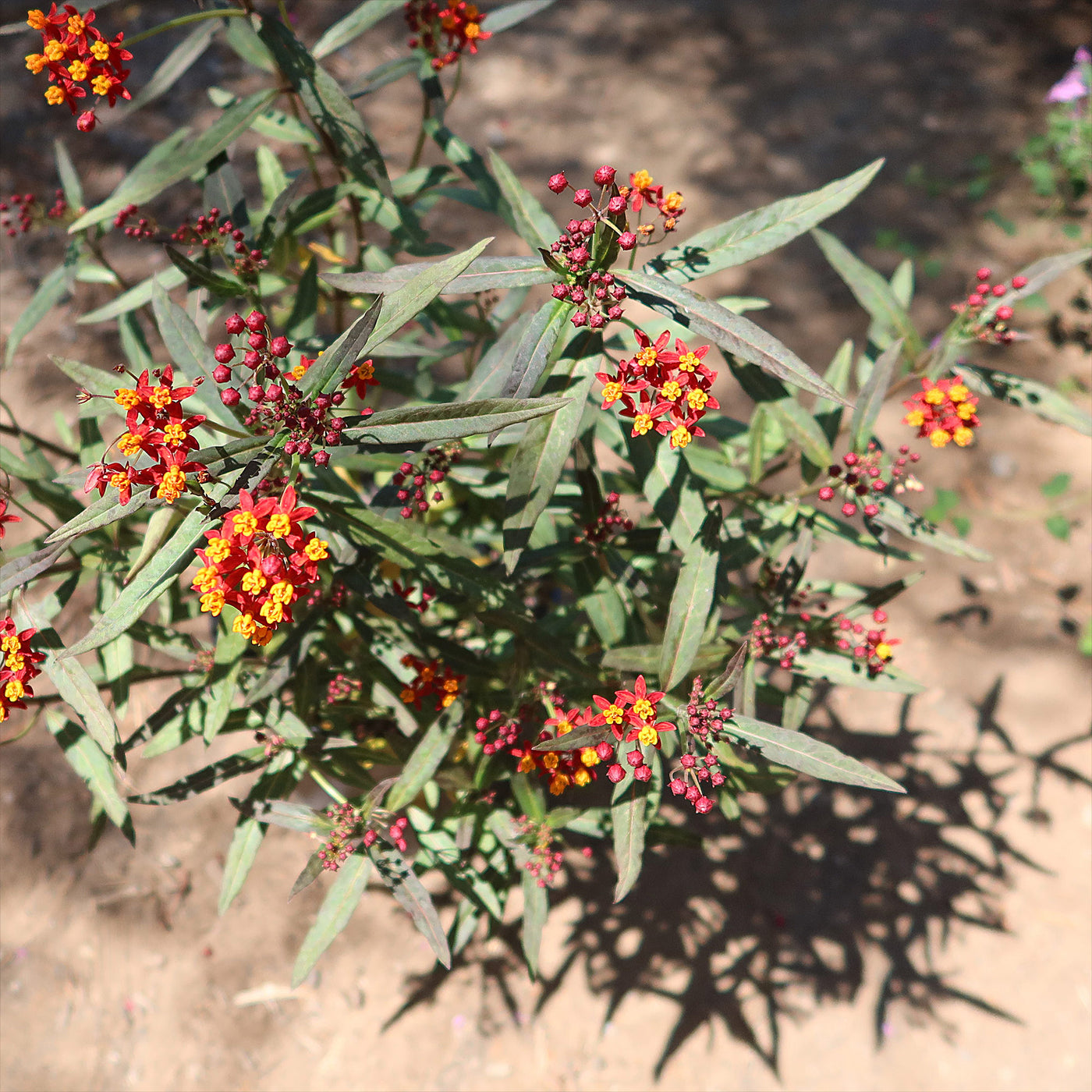
This milkweed tropical plant is distinguished by its bright, vibrant flowers, upright, slender stems, and narrow, lance-shaped leaves of medium green color.
Tropical Milkweed also produces milky sap when its stems or leaves are broken; a feature common to many species in the milkweed family.
The milkweed butterfly plant can grow up to 4 feet tall and spread around 2 feet in width, making it a medium-sized perennial in garden settings.
The flowers of Asclepias curassavica are one of its most prominent features. Its upright habit and bright flowers make it a striking addition to any butterfly garden.
Blooming in clusters at the tops of the stems, they are an eye-catching mix of fiery red and orange petals with a central yellow crown. These flowers are long-lasting and tend to bloom from spring through fall in warmer climates, ensuring a consistent source of nectar for visiting pollinators.
When and How to Water Your Tropical Milkweed
Water newly planted tropical milkweed regularly, about once a week, until it's established. After that, it's usually drought-tolerant and only needs watering during prolonged dry periods. When watering seedlings, spray the soil with a water bottle until it's damp. Once seedlings have roots, water from the bottom up by pouring ½ inch of water into the tray. A good rule of thumb is to water the plant when the top inch of soil feels dry to the touch.
In the spring and summer, during the active growing season, you may need to water more frequently, especially during hot and dry spells. To prevent waterlogging, ensure that the pot or planting area has good drainage. If the plant is in a container, make sure there are drainage holes at the bottom. Additionally, mulching around the base of the plant can help retain moisture in the soil and reduce the frequency of watering. In the winter months, reduce watering frequency as the plant goes dormant and requires less moisture.
Observing the plant for signs of stress, such as wilting or yellowing leaves, can also guide your watering schedule. Adjust the watering frequency based on the plant's needs and the environmental conditions. By providing adequate but not excessive water, you can help your tropical milkweed thrive and continue to enchant with its colorful blooms.
Light Requirements – Asclepias curassavica
When growing indoors, tropical milkweed plants thrive in bright, indirect light for at least 4-6 hours a day. Placing them near a sunny window where they can receive sunlight for a few hours a day is ideal. If natural light is limited indoors, supplementing it with a grow light can help ensure the plant gets the light it needs to grow and bloom successfully.
For outdoor cultivation, Asclepias curassavica prefers full sun, which means they need at least 6 hours of direct sunlight per day.
Planting them in a location where they can soak up the sun's rays will promote healthy growth and abundant flowering.
However, in hotter regions, providing some afternoon shade can help protect the plant from scorching sun and heat stress.
Whether indoors or outdoors, it's essential to monitor the plant's response to light conditions. If the plant starts to look leggy or pale, it may be an indication that it needs more light.
Adjusting the plant's placement to meet its light requirements will help ensure it thrives and continues to attract butterflies with its colorful blooms.
Optimal Soil & Fertilizer Needs
For optimal growth, tropical milkweed thrives in well-draining soil with a slightly acidic to neutral pH level. A good quality potting mix designed for flowering plants, or a mix of garden soil, sand, and perlite can provide the proper drainage and aeration the plant needs. Avoid heavy clay soils that can lead to waterlogging, which may harm the plant's roots. Instead, make or buy a well-draining potting mix, or ideally use our Go to specialized potting mix from planetdesert com collections soil top dressing and amendments products soil cactus mix blend 1 gal 4 qt cacti succulent dirt compost growing media variant 43626295951603specialized potting mix, opens in a new tab that contains 5 natural substrates and mycorrhizae to promote the development of a strong root system that helps your milkweed plants to thrive.
When it comes to fertilizing tropical milkweed, a balanced, slow-release NPK fertilizer with equal parts nitrogen, phosphorus, and potassium can support healthy growth and vibrant blooms. During the growing season in spring and summer, fertilize the plant once a year in the spring to provide a steady supply of nutrients. Be cautious not to over-fertilize, as this can lead to excessive foliage growth at the expense of flower production.
Additionally, incorporating organic matter like compost into the soil can help improve its structure and fertility over time. Organic fertilizers, such as compost tea or diluted fish emulsion, can also be beneficial for tropical milkweed, providing a natural source of nutrients that promote overall plant health.
Hardiness Zone & more
For tropical milkweed grown indoors, maintaining a consistent temperature between 65-80°F is ideal for its growth and development. Avoid exposing the plant to sudden temperature fluctuations or drafts, as this can stress the plant and affect its overall health. Providing a warm and stable indoor environment will help tropical milkweed thrive and produce vibrant blooms.
For outdoor cultivation, Asclepias curassavica, is well-suited for USDA zones 8 to 11. In these zones, the plant can thrive outdoors year-round, as long as it is provided with the right conditions. These zones typically experience mild winters and warm summers, which are favorable for tropical milkweed growth. If you live in a colder climate outside these zones, you can still grow tropical milkweed as an annual or overwinter it indoors to protect it from frost.
Tropical milkweed thrives in high humidity levels, ideally between 50-70%. To maintain proper humidity levels, consider misting the plant regularly or placing a humidifier nearby. Avoid overwatering as this can lead to root rot and other issues.
Wildlife - Tropical Milkweed attracts the following Friendly-Pollinators
The Tropical milkweed is a magnet for pollinators, especially butterflies. It is notably essential for monarch butterflies, both as a nectar source for adults and as a host plant for caterpillars. However, prolonged availability of this milkweed in non-native areas may disrupt monarch migration, as it can lead to the year-round presence of the butterflies, which can, in turn, cause a build-up of the harmful OE parasite.
Toxicity: Like most milkweed species, Asclepias curassavica contains toxic compounds called cardiac glycosides, which can be harmful to pets, livestock, and even humans if ingested in large quantities. The milky sap can also cause skin irritation, so caution should be exercised when handling the plant. Its mild toxicity, however, plays a protective role for monarch caterpillars, which consume the plant and become toxic to predators themselves.
Asclepias curassavica Propagation
To propagate Asclepias curassavica, you can collect seeds from the plant pods once they have dried and split open. Sow the seeds in a well-draining potting mix, lightly covering them with soil. Keep the soil consistently moist but not waterlogged, and place the pots in a warm, sunny location. Seeds typically germinate within a few weeks.
You can also propagate tropical milkweed through stem cuttings. Take a cutting from a healthy stem, remove the lower leaves, and place the cutting in a glass of water until roots develop. Once roots have formed, transplant the cutting into a pot with well-drained soil to continue growing. By following these propagation methods, you can easily expand your tropical milkweed garden and enjoy its beauty in multiple locations.
Key Takeaways
- Tropical Milkweed is a vibrant, perennial drought-tolerant plant with clusters of bright orange, yellow, or red flowers that attract butterflies and hummingbirds.
- Tropical Milkweed (Asclepias curassavica) is widely planted to help support endangered monarch butterflies, providing a crucial food source for their caterpillars.
- It grows 4 feet tall and 2 feet wide, with dark green, glossy leaves that provide a striking backdrop for its colorful blooms.
- This milkweed variety thrives in full sun, well-drained soil, opens in a new tab, and warm temperatures, making it perfect for tropical and subtropical gardens.
- Water regularly, but avoid overwatering, which can lead to root rot and other issues.
- Fertilize lightly during the growing season, which is typically spring, to promote healthy growth and blooming.
- Prune in fall or winter to maintain shape and encourage new growth.
- By planting Asclepias curassavica (Tropical Milkweed), you'll not only add a pop of color to your garden but also support the monarch butterfly population, so consider adding this beautiful and beneficial plant to your garden today!
Shipping Notes
- Free Standard Shipping on $100+ Orders to the USA.
- Except Preorder products are shipped in 48 hours.
- Delivery to the USA:
- Standard Shipping : 3-10 business days
- If time is of the essence, please consider selecting expedited delivery for faster service.
Exchange/Return Notes
- We offer a 30-day return/exchange service after receiving.
- Final sale items are not eligible for returns or exchanges.
- To process your return/exchange, please contact us at [email protected]
- Please click here for more details>>> Return & Exchange Policy