Pay in installments of $5.94 with
 ,
,
 and
and

Shipping Estimate
USA
- USA
- CAN
- USA
- CAN
Ships within 48 hours · Estimated delivery Jul 29 - Aug 3
 Promo Codes Available:
For Your Every Summer RSVP, with Code: SUMMER15
Description
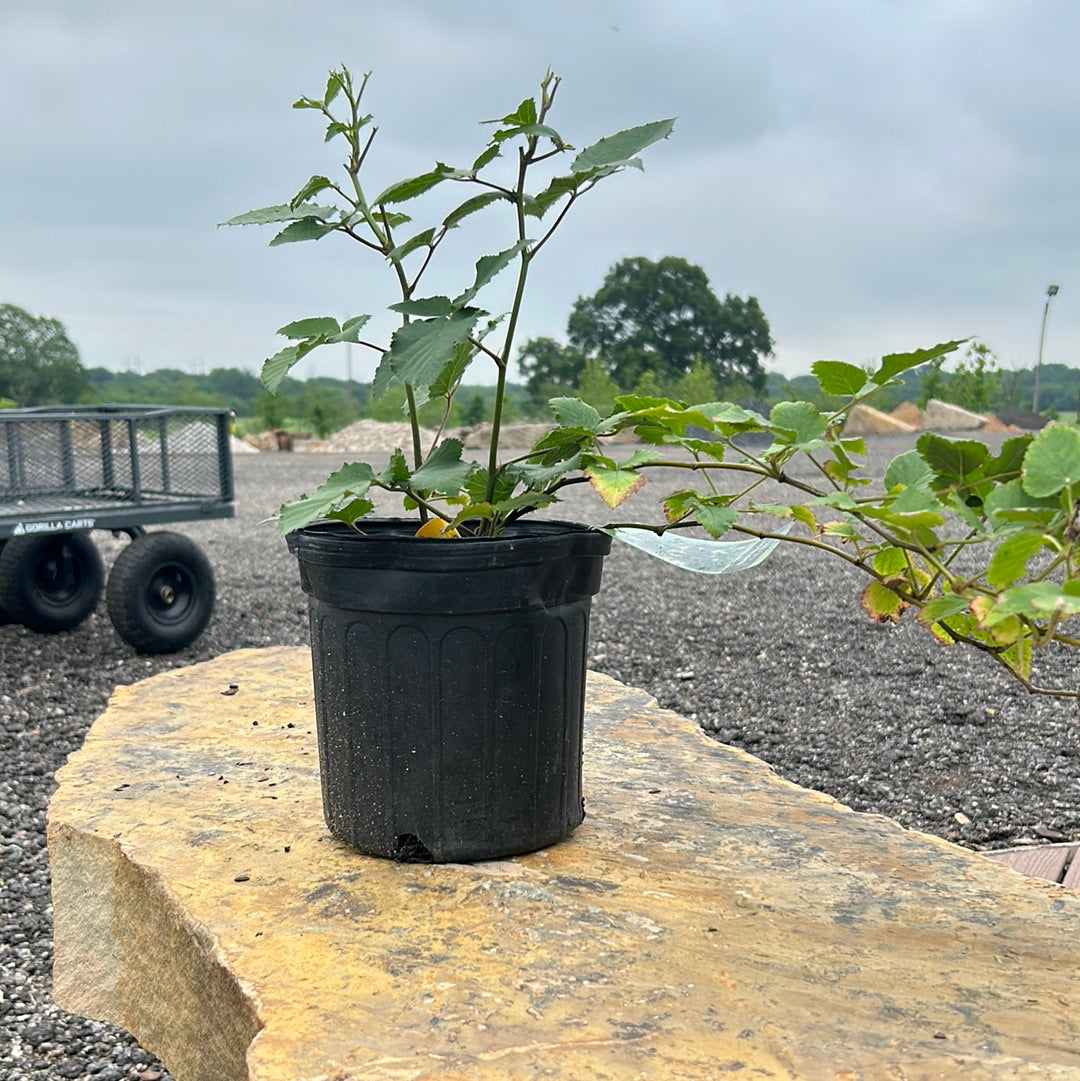
blackberry plants in pots Blackberry Arapaho – Texas Tree FarmsThe Arapaho Blackberry is a highly popular, early ripening deciduous fruiting shrub celebrated for being the very first erect, completely thornless variety introduced by the University of Arkansas breeding program. It produces medium to large, glossy black berries that are exceptionally firm and carry a sweet, classic blackberry flavor. It is one of the earliest ripening thornless varieties available, typically serving up a heavy harvest over a
The Arapaho Blackberry is a highly popular, early-ripening deciduous fruiting shrub celebrated for being the very first erect, completely thornless variety introduced by the University of Arkansas breeding program. It produces medium-to-large, glossy black berries that are exceptionally firm and carry a sweet, classic blackberry flavor. It is one of the earliest-ripening thornless varieties available, typically serving up a heavy harvest over a concentrated 4-week period in early summer. It behaves as a long-lived perennial root system with a 15-to-20-year lifespan, producing biennial (2-year) canes that fruit heavily in their second summer before needing to be pruned away to make room for fresh growth. This cultivar is prized for its thornless canes, which make harvesting easier and more comfortable. Because the canes grow thick, upright, and sturdy, Arapaho requires little to no trellising compared to trailing varieties, making it an incredibly low-maintenance favorite for home gardens and commercial pick-your-own patches alike.
| Scientific Name | Rubus fruticosus 'Arapaho' |
|
Foliage: Deciduous |
Leaves: Compound, palmate leaves (usually 3-5 leaflets) with jagged, serrated edges. They are a deep, rich green and have a slightly textured surface. As the temperatures drop, the leaves will take a deep reddish or burgundy tint and then drop. Don't be alarmed if your plant looks like a "bundle of sticks" in January- this is a healthy part of its life cycle as it uses this dormant period to meet its chill hours requirement. Flowers: Clusters of simple, five-petaled white flowers that bloom in late spring. Fruit: Medium-sized, firm, and glossy black. They have a sweet, mild flavor with very small seeds compared to other varieties. Seeds: Small, inconspicuous Pyrenees (hard pits) with the drupelets of the berry. Canes: Thornless and "Erect". The canes are sturdy, reddish-green when young, turning woody and tan-brown as they mature. They grow upright rather than trailing along the ground. |
| Lifespan: Perennial | The Arapaho Blackberry has an average productive lifespan of 15 to 20 years, very similar to its sibling variety, the 'Apache'. |
| Mature Height | 4-6 feet |
| Mature Width (Spread) | 3-5 feet |
| Growth Rate | Fast growing (1-3 feet per year); can produce fruit in its second year |
| USDA Zone/Chill Hours | Zone 5-9; Moderate chill requirements (400-500 hours) |
PLANT CARE & CHARACTERISTICS
Light Requirements: Full Sun. (6-8 hours required for sweetness and fruit production).
Water Requirements: Moderate; needs ~1 inch of water per week, especially during fruiting. If you live in an area with very dry winters, it is a good idea to give the base of the plant a deep soak once a month so the roots don't completely dehydrate before spring.
Drought Tolerance: Moderate. While more resilient than some berry types, drought during the fruiting stage will result in small, shriveled berries.
Soil Type: Well-drained soil with good fertility and a slightly acidic to neutral pH level (pH 6.0-6.8. It can tolerate a variety of soil types, including loamy, sandy, or clay soil, as long as it provides adequate drainage. Prior to planting, it's beneficial to amend the soil with organic matter such as compost or aged manure to improve soil structure and fertility.
Deer Resistance: Moderate. Deer generally prefer the tender new growth of apple trees over blackberry leaves, but they will graze on them if other food is scarce.
Pest/Disease Resistance: The 'Arapaho' blackberry is widely regarded as one of the most "clean" and easy-to-grow varieties because it was specifically bred for high disease resistance. While it isn't invincible, it allows for a much lower-maintenance garden compared to older, wilder varieties. This variety is highly resistant to Orange Rust and Double Blossom (Rosette) and moderate resistance to Anthracnose and Crown Gall.
Growth Habit: Erect. This means the plant is genetically programmed to grow stiff, sturdy, upright canes that act more like a small shrub than a crawling vine. Unlike "trailing" blackberries that snake along the ground, Arapaho canes are thick and woody, designed to support their own weight.
Pollination: Self-pollinating. You only need one plant or get fruit, though more plants will yield a larger harvest.
Harvest: One of the earliest-ripening, thornless, erect varieties, typically harvested in early spring to mid-summer, from late April-May to early July. Typically, it ripens about 2 weeks before the 'Navaho' variety. Because Arapaho has a very concentrated harvest, you will need to pick it every 2 days during the peak of June to ensure you don't lose yield to over-ripening or birds.
3 Signs Your Arapaho Berries are Ready to Harvest
Blackberries can be deceptive—they turn black before they are actually sweet.
1. The "Dullness" Test: A shiny, glossy black berry is usually still tart. Wait until the berry loses a bit of that "patent leather" shine and becomes slightly matte or dull. That is when the sugars are at their peak.
2. The "Touch" Test: Give the berry a very gentle tug. If it's ripe, it will release from the central white core (the receptacle) instantly. If you have to pull, it’s not ready.
3. The Plumpness: The individual "drupelets" (the tiny bumps that make up the berry) should look swollen and fat. If they look tight or flat, the berry hasn't finished taking up water and sugar.
YIELD
| Year | Yield | Growth Focus |
| Year 1 | 0 lbs | Developing a strong, upright root system. You will likely see "primocanes" (first-year canes) growing vigorously. While they might produce a few scattered berries, you should focus on plant growth. |
| Year 2 | 1–3 lbs | First harvest; The very same canes, "floricanes" (second-year canes) overwinter, wake up the following spring, bloom with white flowers, and produce a heavy harvest of early-ripening, sweet berries. Once the summer harvest wraps up, these individual canes naturally die off completely. Focus on trellis training. |
| Year 3 | 5–8 lbs | Approaching maturity. The crown will be established enough to give you a heavy, consistent crop. |
| Year 4+ | 8–12+ lbs | Full production for a healthy, mature bush. |
Factors That Boost Arapaho Yield
1. The "Upright" Advantage: Arapaho was the first truly erect thornless variety. Because the canes are so stiff and strong, they can support a very heavy fruit load without leaning as much as the 'Natchez'.
2. Tipping for More Fruit: To hit that 10lb+ mark, you must "tip" the new primocanes in the summer when they reach about 4 feet tall. This forces the plant to create side branches (laterals). Since Arapaho fruits heavily on these side branches, more tipping = more berries next year.
3. Self-Thinning: Arapaho is excellent at "sizing" its own fruit. Unlike some varieties that produce thousands of tiny berries, Arapaho naturally balances its energy to ensure most of the berries reach a medium-large, marketable size.
STORAGE/SHELF LIFE
| STORAGE METHOD | SHELF LIFE | NOTES |
| Countertop | 1–2 Days | Arapaho has a high sugar content. In a warm kitchen, they can begin to soften or ferment quickly. Keep them in a cool, shaded spot if not refrigerating. |
| Refrigerator | 7–10 Days | This is the Arapaho’s strong suit. Because the berries are firm and have "tougher" skin than the Natchez, they are less prone to leaking juice and getting moldy. |
| Freezer | 10–12 Months | Excellent for freezing. Because of their medium size and firmness, they don't turn into "mush" as easily as larger, juicier berries when thawed. |
Best Practices for Freshness
1. The Gloss Test: Arapaho berries are best picked when they have just lost their high-gloss shine. If they are still very shiny, they will stay firm in the fridge for the full 10 days but will be quite tart. For the "sweetest" shelf life, pick them when they are matte black and eat them within 5 days.
2. Air Circulation: Like your other blackberries, do not store them in a deep bowl. Use a wide, flat container so the berries on the bottom aren't being crushed by the weight of the ones on top.
3. The "Chill" Priority: The sooner you get the Arapaho into the fridge after picking, the longer they will last. "Field heat" is the fastest way to degrade the sugars in the berry.
4. Dryness is Key: Never wash them before storing. If you find a single moldy berry in the container, remove it immediately, as the Arapaho’s firm skin can usually protect the neighboring berries if the "infection" is caught early.
PRUNING
Because the Arapaho is a true erect variety, it is one of the easiest blackberries to manage. Its canes are naturally stiff and sturdy, meaning it doesn't "flop" over like the Natchez. However, to keep it from becoming a tangled thicket and to maximize your 8–12 lb yield, you need to follow a specific two-step pruning rhythm.
1. Summer "Tipping" (The Growth Phase): This is the most critical step for Arapaho. Because it is so vigorous, if you don't tip it, it will grow into a single, 8-foot-tall "whip" with very few berries.
- When: As soon as the new green primocanes reach 40–48 inches (about 4 feet).
- How: Snip off the top 2 inches of the cane with sharp pruners.
- Why: This stops upward growth and forces the plant to send out lateral (side) branches. These side branches are where the fruit will grow next summer.
- The "Arapaho Twist": Since Arapaho is so sturdy, tipping it at 4 feet creates a strong, self-supporting "trunk" that can often stand without a trellis (though a simple wire still helps with heavy fruit loads).
2. Winter Pruning (The "Clean-Out"): Perform this while the plant is dormant (late January or February) to set the stage for your June harvest.
- Step 1: Remove Spent Floricanes: Identify the old canes that produced fruit last year (they will be gray/brown and brittle). Cut these flush to the ground.
- Step 2: Thin the Row: Arapaho produces "suckers" (new canes) from the roots quite aggressively. To prevent overcrowding, thin the canes so you have about 4 to 6 of the strongest canes per foot of row. This ensures every berry gets enough sunlight and airflow.
-
Step 3: Trim the Laterals: Look at the side branches that grew after your summer tipping. Cut these back to a length of 12–18 inches.
- Why? If laterals are left too long, the plant will produce too many tiny berries, and the branches might snap. Shortening them ensures fewer, but much larger and sweeter berries.
Shipping Notes
- Free Standard Shipping on $100+ Orders to the USA.
- Except Preorder products are shipped in 48 hours.
- Delivery to the USA:
- Standard Shipping : 3-10 business days
- If time is of the essence, please consider selecting expedited delivery for faster service.
Exchange/Return Notes
- We offer a 30-day return/exchange service after receiving.
- Final sale items are not eligible for returns or exchanges.
- To process your return/exchange, please contact us at [email protected]
- Please click here for more details>>> Return & Exchange Policy