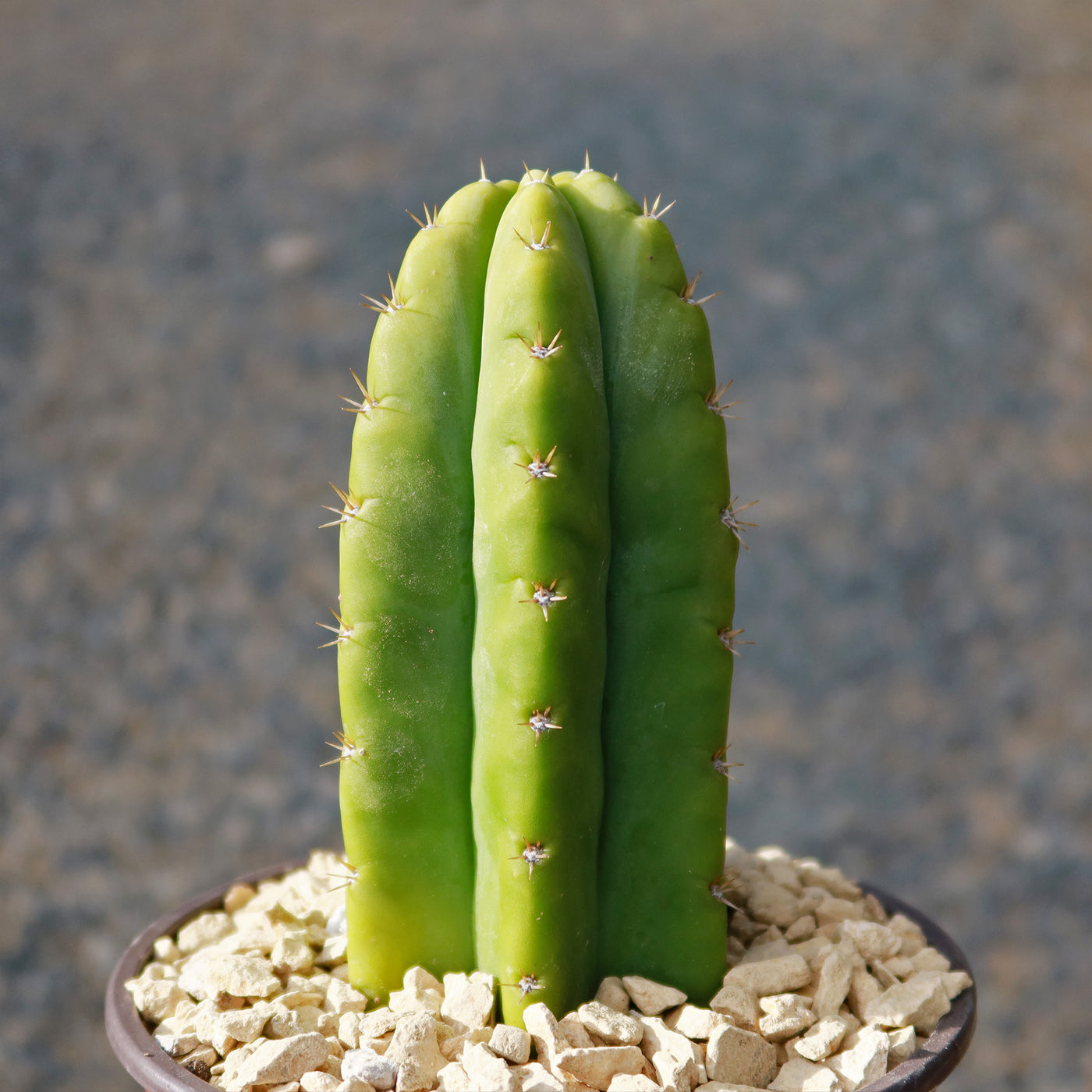
cactus de san pedro precio Shop 'San Pedro Cactus - Echinopsis pachanoi' Care and Growing Guide
SKU: 54730951905
cactus de san pedro precio

cactus de san pedro precio Shop 'San Pedro Cactus - Echinopsis pachanoi' Care and Growing Guide

Sale price$23.73 Regular price$26.37
Save 10%

Pay in installments of $6.59 with ShopPay, AfterPay and Klarna

Shipping Estimate
USA
  • USA
  • CAN

Ships within 48 hours · Estimated delivery Jul 1 - Jul 6

Promo Codes Available:

For Your Every Summer RSVP, with Code: SUMMER15

Description

cactus de san pedro precio Shop 'San Pedro Cactus - Echinopsis pachanoi' Care and Growing GuideIntroducing the San Pedro cactus, also known as Echinopsis pachanoi (Syn. Trichocereus pachanoi) or Trichocereus Echinopsis pachanoi, which is among the superstars of the cactus world. This fast growing columnar cactus is also known as the Wachuma and Huachuma. Standing tall and proud, this magnificent San Pedro cactus columnar beauty can reach heights of up to 20 feet and spread its branches wide, up to six feet! With stems that range from vibrant

Introducing the San Pedro cactus, also known as Echinopsis pachanoi (Syn. Trichocereus pachanoi) or Trichocereus Echinopsis pachanoi, which is among the superstars of the cactus world. This fast-growing columnar cactus is also known as the Wachuma and Huachuma. 

Standing tall and proud, this magnificent San Pedro cactus columnar beauty can reach heights of up to 20 feet and spread its branches wide, up to six feet! With stems that range from vibrant green to mesmerizing blue-green shades, San Pedro is a true showstopper in any landscape. As your San Pedro cactus plant matures, its colors deepen and intensify, adding even more charm to its already captivating presence.  


When the San Pedro cactus flowers bloom, they emit a sweet fragrance that attracts pollinators like bees and butterflies.

The flowers are usually large and trumpet-shaped and come in various colors, including white, cream, and yellow. The petals have a delicate texture and often have a waxy appearance.

The fragrant flowers usually open during the day and close at night. They have a short blooming period, typically lasting for a day or two.

During the blooming season, which usually occurs in late spring or early summer, multiple flowers can bloom at once, creating a captivating sight.

The San Pedro cactus flowers are not only visually appealing but also have cultural significance. In some indigenous cultures, the flowers are used in traditional ceremonies and rituals. They are believed to have spiritual and healing properties.

The San Pedro cactus also has Pitahaya red San Pedro cactus fruits. These fruits are known for their sweet and refreshing flavor, making them a popular choice for consumption. Additionally, they are rich in antioxidants and vitamins, providing numerous health benefits.  

When and How to Water Your San Pedro Cactus 

San Pedro cactus is a drought-tolerant plant that can survive in dry conditions for long periods of time. However, regular watering is still needed to stay healthy. Generally, the San Pedro needs to be watered once every two weeks. During the summer months, when temperatures are high and the plant is actively growing, it may need to be watered more frequently.  

When watering your Trichocereus Echinopsis pachanoi, be sure to soak the soil thoroughly and allow it to drain completely. To prevent root rot and other issues, avoid overwatering.The leaves may become dry and brittle, and the cactus may stop growing if it is underwater. Over time, the San Pedro cacti may start to lose their shape and become misshapen.  

In addition to these physical symptoms, underwatering can also make the cactus more susceptible to pests and diseases. To keep your San Pedro cactus healthy and thriving, it is important to water it regularly and provide it with the right growing conditions. 

Light Requirements - Where to Place Your San Pedro Cactus

When grown indoors, your San Pedro cactus should be placed in a bright, sunny location where it can receive at least six hours of direct sunlight each day.

For outdoor cultivation, the San Pedro cactus requires a lot of sunlight to grow and thrive.

In its natural habitat, this cactus is exposed to direct sunlight for 4-6 hours each day.

If you live in an area with a lot of cloud cover or limited sunlight, you may need to supplement your cactus's light with artificial grow lights.

So, let's give your San Pedro cactus plant what it deserves—just the right amount of light to bloom into the ultimate showstopper! 

But beware; too much sun can lead to burns, so make sure you gradually increase exposure or bring it indoors during a heatwave. And if your Echinopsis pachanoi isn't getting enough light, it'll start stretching toward its source.

Optimal Soil & Fertilizer Needs 

Use well-drained soil that is designed specifically for your Echinopsis pachanoi cactus. These specialty soil mixes have been precisely developed to imitate well-draining desert soils. Commercial cactus soil is affordable and available online or at Home Depot.

Planet Desert specializes in cacti and has a specialty cactus potting mix that contains 5 natural substrates and organic mycorrhizae to promote the development of a strong root system that helps your San Pedro cactus thrive. 

When it comes to fertilizing your San Pedro cactus plant, it only needs a small amount of fertilizer applied once a year in the spring. Cacti prefer fertilizer with lower doses of NPK, with a maximum ratio of 5-10-5 which is higher in phosphorus than nitrogen. Remember, overfertilization can lead to root rot or even the death of the plant, so be cautious! 

Hardiness Zones & More 

San Pedro cactus is a hardy plant that can grow in a variety of different climates. It is native to the Andes Mountains, where it can be found growing at high altitudes in a range of temperatures. In the United States, San Pedro cactus is typically grown in warm, dry climates such as those found in the southwestern states. 

When growing indoors, the San Pedro cactus prefers a warm and dry environment. It thrives in temperatures ranging from 55°F to 75°F. Aim for a humidity level of around 40% to 50% to create an ideal indoor environment for your San Pedro cactus.

For outdoor cultivation, this cactus is hardy in USDA zones 8–11, which means that it can tolerate temperatures as low as 20 degrees Fahrenheit.

If you live in an area with extreme temperatures, you may need to take extra precautions to ensure that your San Pedro cactus Echinopsis pachanoi, stays healthy. 

In addition to its hardiness zone, it is also important to consider the humidity requirements of the San Pedro cactus. This cactus is adapted to dry, arid environments and does not require a lot of humidity to grow. In fact, high levels of humidity can be detrimental to the health of the plant, as they can promote the growth of mold and fungal diseases. 

When growing San Pedro cactus, it is important to provide good air circulation and avoid overwatering to prevent the buildup of excess moisture around the base of the plant.

Wildlife - San Pedro Cactus Attracts the Following Friendly Pollinators

The San Pedro Cactus flowers attract several friendly pollinators such as bees, butterflies, and hummingbirds. These pollinators are essential for the reproduction of the cactus and play a crucial role in maintaining the ecosystem's biodiversity.

Butterflies
Bees
Hummingbirds
Lady Bugs
Multi Pollinators
Other Birds

According to ASPCA, the San Pedro Cactus is safe for humans but can be mildly toxic to cats and dogs if ingested in a large amount. However, it is safe to touch and handle, making it a popular choice for ornamental cactus gardens. However, it is important to keep San Pedro Cactus out of reach of pets to prevent accidental ingestion.

How to Propagate Your San Pedro Cactus

Propagating the San Pedro cactus can be done through seeds or cuttings, but each method has its pros and cons. While cuttings are a quicker option, this method involves cutting off the top of the plant, which permanently alters its tall, elegant columnar form. For this reason, propagation by cuttings is only recommended if the plant has already broken or been damaged. In such cases, you can take a healthy segment, allow it to be callous for about a week, and plant it in well-draining soil to root. However, this approach is less ideal for those who wish to maintain the plant's natural aesthetics.

Seed propagation is a method for cultivating new cacti plants, and preserving their beauty. Harvested from mature cacti's fruit, seeds are cleaned, dried, and sown onto a well-draining soil mix. Despite the patience required, this method allows for healthy plants without compromising the parent cactus's appearance, despite the need for indirect sunlight or grow light.

Key Takeaways

  1. Unlike many other cacti, the San Pedro grows quickly, often reaching heights of 10–20 feet under ideal conditions, making it a popular choice for ornamental gardens.
  2. This cactus is highly adaptable, thriving in a variety of climates and requiring minimal care. It is drought-tolerant, hardy in USDA zones 8–11, and grows well in nutrient-rich, well-draining soil.
  3. San Pedro Cactus is a drought-tolerant that thrives in arid conditions and requires minimal watering. It is a popular choice for xeriscaping and landscaping in dry climates due to its ability to store water in its fleshy stems.

Final Thoughts

Overall, the San Pedro cactus (Echinopsis pachanoi) is a remarkable plant with unique features. It is characterized by its tall, columnar shape and beautiful white or yellow flowers. The cactus can grow to impressive heights, reaching up to 20 feet in optimal conditions. Its spines are relatively short and are arranged in clusters along the ridges of the cactus. The San Pedro cactus is a low-maintenance plant that thrives in well-draining potting soil and enjoys ample sunlight. It prefers a dry environment and can tolerate drought, so it should be watered sparingly, allowing the soil to dry out between waterings.

Don't miss out on this opportunity to add something truly exceptional to your garden. Buy San Pedro cactus for sale today to enhance your collection! 

Shipping Notes
  • Free Standard Shipping on $100+ Orders to the USA.
  • Except Preorder products are shipped in 48 hours.
  • Delivery to the USA:
  1. Standard Shipping : 3-10 business days
  • If time is of the essence, please consider selecting expedited delivery for faster service.
Exchange/Return Notes
  • We offer a 30-day return/exchange service after receiving.
  • Final sale items are not eligible for returns or exchanges.
  • To process your return/exchange, please contact us at [email protected]
  • Please click here for more details>>> Return & Exchange Policy
SKU: 54730951905

Discover Niche Categories That Outsell cactus de san pedro precio

Top-Converting Item to Boost Your Average Order

4.3 ★★★★★
Based on 669 reviews
Sort
Highest Rating
Newest First
Oldest First
Product Reviews
T
Verified Purchase
Timothy Shea
Pawtucket, US
★★★★★ 5
Reading as worship?
Format: Hardcover
Dr. Wilson inspires us to see and appreciate reading with new eyes and hearts. This is a book I’m planning to add to my college literature syllabus and even my book club!
WAS THIS REVIEW HELPFUL?YesReportShare
Reviewed in the United States on September 22, 2024
C
Verified Purchase
Cryolitterae
Pawtucket, US
★★★★★ 5
An excellent survey of Christians should read
Format: Kindle
I love how complicated ideas are presented in a very simple way. This deserves to be read alongside Joshua Hren's How to Read like a Catholic
WAS THIS REVIEW HELPFUL?YesReportShare
Reviewed in the United States on May 12, 2023
K
Verified Purchase
Kathleen M. Moser
Dallas, US
★★★★★ 5
Very good book
Format: Hardcover
Good review I’d value if reading sland recommendations were good
WAS THIS REVIEW HELPFUL?YesReportShare
Reviewed in the United States on June 16, 2023
J
Janice
Lowell, US
★★★★★ 5
Excellent book about how, why, and what Christians should read.
Format: Hardcover
Disclaimer- I cannot affirm the recommended book list at the end of the book as I am unfamiliar with many of the books. Jessica Hooten Wilson introduces us to four Christian writers throughout history whose writings help readers better understand themselves and the world they live in through the lens of Scripture. As we learn what shaped each of these writers and the contributions they made, we understand the importance of why we should read, what we should read, and how we should read. Through the work of these historical figures, she helps us to discern literal and historical context, look for allegorical and spiritual significance, and determine the tropological meaning with a anagogical perspective, and more! Wilson explains how the reader is challenged, convicted, conformed, and compelled toward godliness through reading. Through shared stories and experiences, we learn about others, God, and ourselves. Something is worth reading if it leads us to truth; not away from it (p. 33). While there are many benefits of reading, I’m not fully on board with the idea that reading in general must be practiced as a spiritual discipline. In the same way, I’m not convinced watching movies or listening to music must be practiced as a spiritual discipline. I think it is necessary for Christians to filter what we read, watch, and listen to through the lens of Scripture. But she is right- Christians should read the Bible as well as other books. As Wilson explains on page 150, even fiction should test our hearts as we seek truth. This book is excellent! It is well written, very informative, and very compelling.
WAS THIS REVIEW HELPFUL?YesReportShare
Reviewed in the United States on January 6, 2025
C
Verified Purchase
christine johnson
Alexandria, US
★★★★★ 5
A Review from Unity Burbank Center of Spiritual Awareness in Burbank, CA:
Format: Hardcover
Anne Lamott is a unique-styled writer who focuses more on expression than precision and in doing so, you can feel her heart poured out on the page and still hear its pounding. In the reading, there is laughter both from joy and from her refreshing frankness and freshness, as well as beautiful recognition of life and ourselves in her experiences, insights and metaphors. Her writing expresses the passion and pain in life, with the ever-present belief in the great balm of Love and connection to the mysterious, loving creator in all of us. She weaves funny, blatant or pained speech (that you can feel are all truthful from her experience) with absolutely piercing-poetic writing, and the combination touches your heart and is a tonic for the soul. She focuses and expands on three prayers we reach out to God with of Help, Thanks and Wow. The final chapter is on Amen. This book helped me see the importance of little prayers, big prayers, frustrated prayers, angry prayers, thankful prayers, awe-inspired heart-bursts, wordless prayers expressed in tears, wonderment in your gut from glories seen with your eyes or in your heart. All prayers. Prayers are the expression and connection to our Creator and each one is an action of faith that we are at least heard. Others carry an awareness that we see and are seen, know and are known, loved and loving, connected, in relationship with God. There is beauty and power in all of our prayers. This book would be one to give or suggest to atheist or agnostic friends or to keep handy in times of crisis for ourselves because it’s entirely without the pretense of knowing all of the answers. It looks squarely at the mess and confusion of life and of ourselves, the unanswered why’s that will always be there, and instead of trying to explain away in any combination of pat answers that leave one in the end reaching but unsatisfied, she reminds that there is always, always still exquisite beauty, awe, revelations and regenerations in life, in Love. I’ve often thought that one of the problems with religion is actually the attempt to have all the answers, each and every one, which of course fails miserably and is full of contradictions, instead of being content in the Mystery. This book, her writing revels in the Mystery and in the Glory of Love. The prayers that we send to our Creator are a beautiful connection to Love, to Life-Source, to the One, where all answers reside. We have and receive answers and miracles that we need, being part and connected to the One, though the answers may often appear differently than we expect. And even in confusion and feeling like some answers are incomplete, in prayer there is connection to what is whole and complete—God, and a reminder that somehow, we and life are whole and complete too. In the sometimes heartbreaking tragedies and complexity of life and relationships, in the violence and pain in the world, in our own stumbles and foibles, in the often repeated mistakes and awkwardness, there is grace, growth, magnificence-there is God-for us, in us. And the Love-connection in prayer is always there. Amen. Sometimes after I read a book and there’s been a little more time to digest, the lessons I need come right to the surface and make themselves clear and known. So, I’d like to share and expand a bit more on the review. Anne Lamott says in the book, “God can handle honesty.” I’d add God can not only handle honesty, but absolutely loves it! In honesty, we are connected to Love and in Love, we can receive truth. Because sometimes what we think or feel isn’t the truth at all, but the truth is that we are thinking or feeling that thought or emotion. Share it with Love and Love will show us the way, love us in the sharing, wherever we’re at. Prayer with God is a place where we have the privilege of “getting real-really real”. After reading this book, I noticed that sometimes I was preparing to pray or delaying connection with Love because I felt unworthy in my energy…As if God was a friend I wanted to call, but because of a funky mood or too heavy of stuff going on, I delayed the call, not wanting to bring them down. Now I see that God is the open line in our lives, back and forth communication, for every circumstance, every mood. We can’t be too mad, too distracted, discouraged, frustrated, disbelieving, too out of touch to pray. God wants to hear from us especially then! This is the time to jump back into Love, back into dialogue, back into the Loving energy and then stay swimming in its precious freedom and connection. Love is the only place that there is true freedom–all of the Love is in Love, in us, in the whole. And all truth and answers and goodness and infinite combinations of Love reside within Love, so there’s no place to prepare for Love. Love is where it’s all at. Just dive right back in. If you’ve been out of the loving energy for two days, you don’t need two days to get back in! Slipping out of Love and all the positivity and truths and beautiful things within it can be a slow unconscious process. But–the holy instant there’s a recognition that you are out of it-jump right back in! Don’t let the negative, untrue energy you are mixed up in tell you there’s anything from preventing you from returning wholly, fully and instantly back into your true self and connection to God in Love. The ego can try to make us feel guilty for being out of Love and use it to say, “Well, you’ve been bad, you can’t jump into Love just now. You did it again, so Love won’t take you back so fast and besides you don’t deserve it because you failed the spirituality test again. You don’t love God enough. You’re not good. God is pissed at you–you don’t deserve all the joy in Love because you didn’t value it or you would’ve stayed in it.” Or the ego might even say, “You need to stay in this energy a bit more in order to do what you need to do.” All these lies just prevent people from jumping back in right away to the Love that refreshes and loves us and always lends a hand. We don’t need to do anything but start talking to Love! We don’t need to patch up our energy before praying because the only healing, lifting and transforming energy is within the whole of Love! We don’t have to be perfect or believe perfectly or try to know all the answers before connecting because Love is where all the Love and the answers we need reside! Love is everything. We won’t know all the answers in this lifetime to all the questions, but we can know what we need to know, we can experience the whole that we are a part of and one with and thus experience and know ourselves to be whole and loved and free. Love is where all of the healing and remedies are for each of us. It’s our freedom. Prayer is a constant dialogue as we swim within Love. We don’t even need to use the word prayer as the word itself represents connection, and within that connection, so many unnameable and beautiful things. God can handle and wants our true expressions, and in Love, we find truth. We are whole, we are ourselves, we are free.
WAS THIS REVIEW HELPFUL?YesReportShare
Reviewed in the United States on March 9, 2014

recommand products