SKU: 65621298940
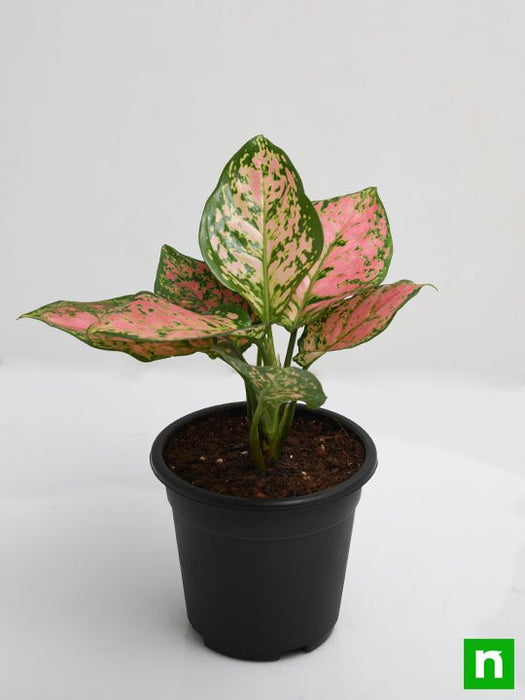
aglaonema dalmation

aglaonema dalmation Buy Aglaonema Pink Dalmatian

Sale price$26.85 Regular price$29.83
Save 10%

Pay in installments of $7.46 with ShopPay, AfterPay and Klarna

Shipping Estimate
USA
  • USA
  • CAN

Ships within 48 hours · Estimated delivery Jul 26 - Jul 31

Promo Codes Available:

For Your Every Summer RSVP, with Code: SUMMER15

Description

aglaonema dalmation Buy Aglaonema Pink DalmatianAglaonema Pink Dalmatian Plant The Aglaonema Pink Dalmatian, also known as Chinese Evergreen, is a stunning houseplant that captivates with its vibrant pink and green foliage. This tropical beauty thrives in low light conditions, making it an ideal choice for indoor spaces. With its unique speckled leaves resembling a dalmatian's coat, it adds a pop of color and elegance to any room. What sets the Aglaonema Pink Dalmatian apart is its remarkable

Aglaonema Pink Dalmatian - Plant

The Aglaonema Pink Dalmatian, also known as Chinese Evergreen, is a stunning houseplant that captivates with its vibrant pink and green foliage. This tropical beauty thrives in low-light conditions, making it an ideal choice for indoor spaces. With its unique speckled leaves resembling a dalmatian's coat, it adds a pop of color and elegance to any room.

What sets the Aglaonema Pink Dalmatian apart is its remarkable adaptability and air-purifying qualities. This plant not only enhances your home decor but also contributes to a healthier indoor environment by filtering out toxins. Its striking appearance and low maintenance requirements make it a favorite among plant enthusiasts and beginners alike.

Special features of the Aglaonema Pink Dalmatian include its ability to thrive in various lighting conditions and its resilience to neglect. This plant can tolerate low humidity and infrequent watering, making it a perfect companion for busy lifestyles.

Growing Instructions

  • Light: Prefers indirect sunlight; can tolerate low light.
  • Soil: Use well-draining potting mix; a mix of peat, perlite, and potting soil works well.
  • Temperature: Thrives in temperatures between 65°F to 80°F (18°C to 27°C).
  • Humidity: Enjoys moderate to high humidity; consider misting or using a humidity tray.

Care Instructions

  • Watering: Allow the top inch of soil to dry out before watering; avoid overwatering.
  • Fertilizing: Feed with a balanced liquid fertilizer every 4-6 weeks during the growing season.
  • Pruning: Remove yellow or damaged leaves to encourage new growth.
  • Repotting: Repot every 1-2 years or when the plant outgrows its container.

Uses

  • Indoor decoration: Perfect for homes, offices, and commercial spaces.
  • Air purification: Helps improve indoor air quality by filtering toxins.
  • Gift plant: A thoughtful gift for plant lovers and beginners.

Fun Facts

  • The Aglaonema genus is known for its resilience and ability to thrive in challenging conditions.
  • Historically, Aglaonema plants were considered symbols of good luck and prosperity in Asian cultures.
  • This plant is non-toxic to pets, making it a safe choice for households with furry friends.
  • Aglaonema Pink Dalmatian is a hybrid variety, showcasing the beauty of selective breeding.

Environmental Impact

By incorporating Aglaonema Pink Dalmatian into your indoor space, you contribute to a healthier environment. This plant helps reduce indoor air pollutants, making your home a safer and more pleasant place to live. Additionally, its low water and light requirements make it an eco-friendly choice, conserving resources while enhancing your decor.

Shipping Notes
  • Free Standard Shipping on $100+ Orders to the USA.
  • Except Preorder products are shipped in 48 hours.
  • Delivery to the USA:
  1. Standard Shipping : 3-10 business days
  • If time is of the essence, please consider selecting expedited delivery for faster service.
Exchange/Return Notes
  • We offer a 30-day return/exchange service after receiving.
  • Final sale items are not eligible for returns or exchanges.
  • To process your return/exchange, please contact us at [email protected]
  • Please click here for more details>>> Return & Exchange Policy
SKU: 65621298940

Discover Niche Categories That Outsell aglaonema dalmation

Top-Converting Item to Boost Your Average Order

4.4 ★★★★★
Based on 12 reviews
Sort
Highest Rating
Newest First
Oldest First
Product Reviews
W
Verified Purchase
Wilbur F. Pierce
Bozeman, US
★★★★★ 5
An Excellent Choice
Format: Paperback
Excellent introduction, notes and translation.
WAS THIS REVIEW HELPFUL?YesReportShare
Reviewed in the United States on June 8, 2017
D
Verified Purchase
David Lemberg
West Palm Beach, US
★★★★★ 5
Five Stars
Format: Paperback
Professor Cornford's translation with running commentary is definitive.
WAS THIS REVIEW HELPFUL?YesReportShare
Reviewed in the United States on November 5, 2015
J
Jordan Bell
West Palm Beach, US
★★★★★ 5
Plato's dialogue about the physical world
Format: Paperback
The two biggest topics in the Timaeus are astronomy and the elements of bodies, which are constructed using triangles and the tetrahedron, octahedron, icosahedron, and cube. I would like to see a translation of the Timaeus that uses it as a way to introduce all the astronomy that appears in the dialogue. Introducing the astronomy does not mean just talking in words about spheres or the zodiac or the ecliptic, but actually explaining how these were used by astronomers. Cornford has much to say, but to someone who has not learned any Greek astronomy his commentary will be opaque and hard to use. I didn't know the astronomy well enough to readily understand Cornford's explanations. I plan to learn more classical Greek astronomy, perhaps using Evans' , and then read Waterfield's translation of the Timaeus . Before reading this you should have read the Republic and know some classical Greek natural philosophy, mathematics, and astronomy. Although Cornford's commentary makes the dialogue staccato, I am glad for it because I wouldn't otherwise have understood much of what Plato says. The Timaeus and the Parmenides are the two dialogues of Plato that one needs commentary to understand; the Parmenides demands the commentary because so much of what is happening depends on the original language, and the Timaeus demands the commentary because of all the things the reader is supposed to be familiar with. The following is a list of topics I kept while reading the dialogue: theory of Forms 27d-28a, 51a-52a; harmonics 35b-36b; time 37c-38e, 39b-e; vision 45b-46c, 67c-68d; space 52b; surfaces 53c; weight 62d-63e; sound 67a-67c; physiology 70c-79e, 80d-86a; antiperistasis 79e-80c.
WAS THIS REVIEW HELPFUL?YesReportShare
Reviewed in the United States on December 12, 2015
S
Steve Lookner
Dallas, US
★★★★★ 4
Helpful, but Waterfield is better for an intro
Format: Paperback
This is basically a scholarly paragraph-by-paragraph commentary on the Timaeus. It's really good for what it is, but I don't recommend it as your first introduction to the Timaeus -- rather, I recommend Waterfield: http://www.amazon.com/Timaeus-Critias-Oxford-Worlds-Classics-ebook/dp/B006NTMD16 A problem with using Cornford as an introduction is that he comments on everything, and it's hard to figure out what the main themes are. I tried reading Cornford as an intro and gave it up, but once I'd read Waterfield I found Cornford extremely helpful both in elucidating passages further than Waterfield does, and in interpreting passages Waterfield doesn't cover. So if you're looking to learn about the Timaeus, I'd suggest Waterfield first and Cornford second (or Cornford alongside Waterfield).
WAS THIS REVIEW HELPFUL?YesReportShare
Reviewed in the United States on February 24, 2014
B
Brian Chrzastek
San Leandro, US
★★★★★ 5
Cornford's running commentary is arguably the best suited to fulfill this desire
Readers of any of Plato's works are bound to feel they might profit from various commentaries. His Timaeus, in particular, may be said to elicit such a hope because of number and intricacy of its details. Cornford's running commentary is arguably the best suited to fulfill this desire: it helps make clear the integrity of the dialogue as a whole and illumines the specific points along the way. Although this work is certainly dated, originally published in 1937, it is certainly one of the best full commentaries on the Timaeus.
WAS THIS REVIEW HELPFUL?YesReportShare
Reviewed in the United States on November 4, 2014

recommand products