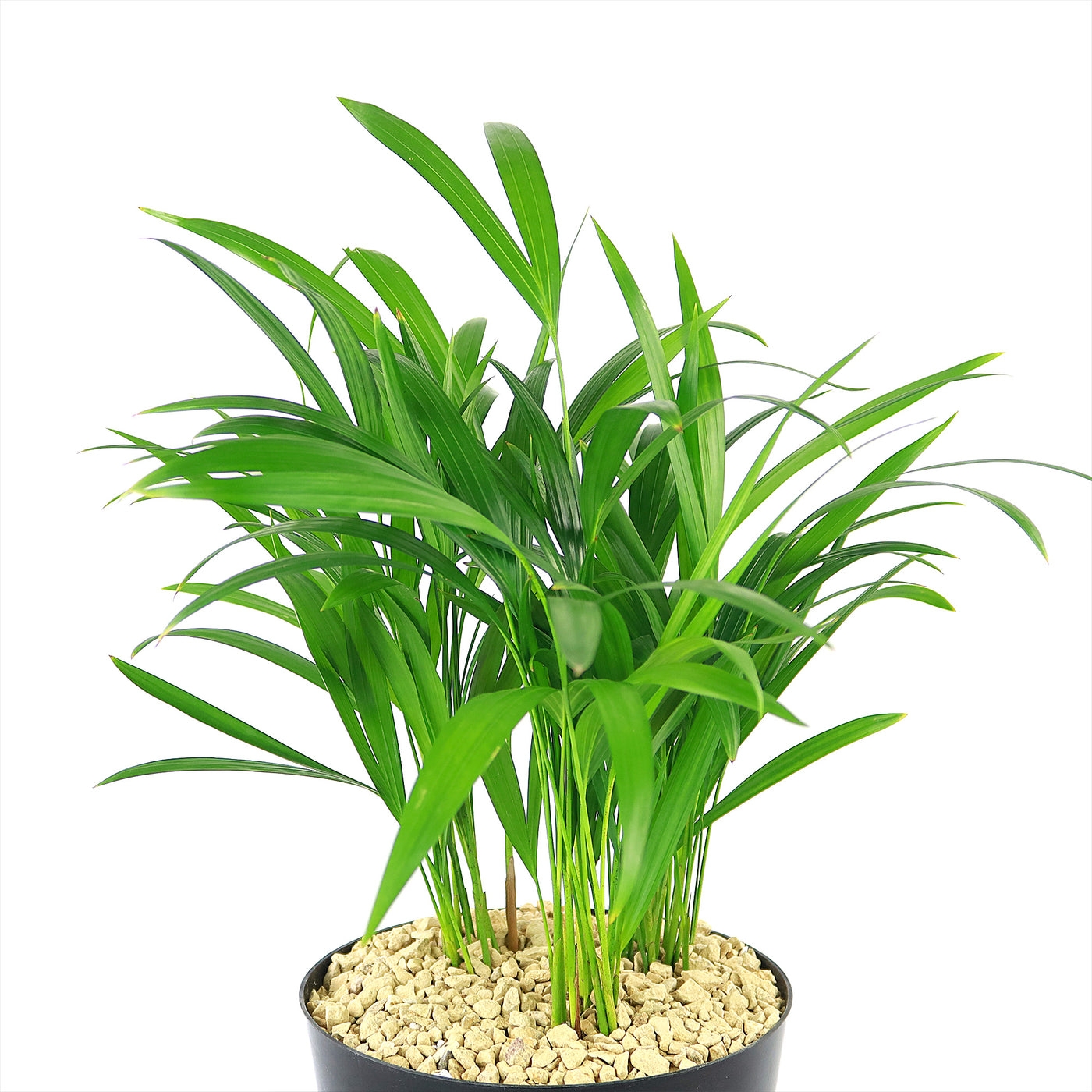
SKU: 68984336509
areca palm indoor benefits

areca palm indoor benefits Shop 'Areca Palm – Dypsis lutescens' Care & Growing Guide

Sale price$24.42 Regular price$27.13
Save 10%

Pay in installments of $6.78 with ShopPay, AfterPay and Klarna

Shipping Estimate
USA
  • USA
  • CAN

Ships within 48 hours · Estimated delivery Jul 27 - Aug 1

Promo Codes Available:

For Your Every Summer RSVP, with Code: SUMMER15

Description

areca palm indoor benefits Shop 'Areca Palm – Dypsis lutescens' Care & Growing GuideKey Highlights Areca Palm Tree Areca Palm grows in dense clumps, with multiple smooth, golden yellow stems emerging from the base and narrow fronds like bamboo leaves, creating a full and bushy appearance. Recognized by NASA, this palm removes toxins like formaldehyde and benzene, improving indoor air quality. One of the most widely grown indoor palms, it thrives in homes and offices, adding a tropical touch with its graceful, feathery fronds. Areca

Key Highlights – Areca Palm Tree

  1. Areca Palm grows in dense clumps, with multiple smooth, golden-yellow stems emerging from the base and narrow fronds like bamboo leaves, creating a full and bushy appearance.
  2. Recognized by NASA, this palm removes toxins like formaldehyde and benzene, improving indoor air quality.
  3. One of the most widely grown indoor palms, it thrives in homes and offices, adding a tropical touch with its graceful, feathery fronds.
  4. Areca Palm can withstand short dry periods, making it relatively low-maintenance.
  5. This palm adapts well to bright, indirect light, requires minimal pruning, and is non-toxic to pets, making it an excellent choice for beginners.

The Areca Palm, known as Dypsis lutescens, is one of the most beloved indoor clumping  palms, known for its graceful, feathery fronds and ability to enhance indoor spaces with a tropical feel. The plant is also known for its ability to improve air quality by filtering out toxins such as formaldehyde and benzene.  Unlike some palms that require extensive care, Areca Palm is relatively simple to grow and responds well to consistent watering and humidity, making it an excellent choice for beginners. 

Native to Madagascar, this palm has gained worldwide popularity as both a houseplant and an outdoor landscape feature in warm climates. Its attractive appearance, air-purifying properties, and low-maintenance nature make it a favorite choice for homes, offices, and commercial spaces. It is also known as a butterfly palm, golden cane palm, and yellow palm. 

Areca Palm is a clustering palm, meaning multiple stems emerge from the base, creating a full and bushy appearance.

The leaves are long, arching, and pinnate, with a lush green color that adds vibrancy to any setting. 

When grown indoors, the plant remains relatively compact, while outdoor specimens can develop into tall, striking features in tropical gardens.

When growing indoors, your Areca Palm typically grows up to 7 feet tall in height, making it an excellent floor plant for homes and offices.

When grown outdoors, this Areca palm tree can reach an impressive height of 30 feet, with a spread of about 12 feet wide. 

Indoor Areca Palms rarely bloom, but outdoor plants may produce small, yellowish-white flowers from late spring to summer. These flowers grow in clusters along the base of the fronds and are followed by small, oval-shaped fruits that transition from green to yellow and eventually turn black when fully mature. The fruits contain seeds but are not typically used for propagation, as division or offsets are preferred methods for growing new plants.

Recognized by NASA’s Clean Air Study, Areca Palm helps remove toxins like xylene, toluene, and carbon dioxide, improving indoor air quality. This palm releases moisture into the air, making it ideal for homes with dry air, especially during winter. 

When and How to Water Your Areca Palm

The Areca palm is drought-tolerant once established, making it an excellent choice for those looking for a low-maintenance tropical plant. While it prefers consistent moisture, it can survive short dry spells without severe damage. Overwatering is a more significant risk than underwatering, as excessive moisture can lead to root rot. Ensure the soil dries slightly between waterings to maintain the right balance. 

In the spring and summer, during its active growing season, the Areca palm tree requires more frequent watering. In warm temperatures, watering once every 5–7 days is ideal, depending on humidity levels. If it is grown outdoors, rainfall can supplement its needs, but manual watering should be adjusted accordingly. Always check the top 1–2 inches of soil before watering to prevent oversaturation. 

In fall and winter, when growth slows down, the watering frequency should be reduced. Watering once every 10–14 days is sufficient to prevent dehydration while avoiding waterlogging. Indoor plants may require slightly more frequent watering if exposed to dry air from heating systems, so monitoring humidity levels is essential. 

Light Requirements – Where to Place Your Areca Palm Tree 

For indoor growth as a houseplant, your Areca palms thrive in bright, indirect light for at least 4-6 hours a day.

A location near an east- or south-facing window with filtered sunlight is ideal. It can tolerate lower light conditions, but growth may slow down, and the leaves may become less vibrant.

To promote healthy foliage, rotating the plant occasionally ensures even exposure to light.

Artificial grow lights can also supplement light if natural brightness is insufficient.

For outdoor cultivation, the Areca palm tree prefers partial to full sun, requiring 4–6 hours of bright, indirect light daily.

Morning sunlight is ideal, while intense afternoon rays may scorch the fronds, especially in hotter climates. If grown in a container, moving it to a shaded area during peak summer months can prevent leaf damage. 

Optimal Soil & Fertilizer Needs 

Areca palms grow best in well-draining, slightly acidic to neutral soil with good aeration. A high-quality potting mix with peat, sand, and perlite ensures proper drainage. Planet Desert has specialized potting soil that includes an organic substrate with mycorrhizae to help with the growth of a healthy root system to help your succulents thrive.

A balanced liquid NPK fertilizer at a 5-10-5 ratio applied once a year in the spring during the growing season promotes lush foliage and robust growth. Slow-release palm fertilizers with essential micronutrients like magnesium and iron also help prevent yellowing leaves. During the dormant season, fertilization should be stopped to avoid unnecessary growth that may weaken the plant in cooler months. 

Hardiness Zones & More 

When growing indoors as a houseplant, the Areca palm plant thrives in temperatures between 65–75°F with humidity levels above 40%. Dry air can cause leaf browning, so misting or using a humidity tray can maintain optimal moisture levels. Avoid placing the plant near cold drafts or heating vents, as sudden temperature fluctuations can cause stress. 

For outdoor cultivation, Areca palm is hardy in USDA zones 10–11, thriving in warm, humid conditions.

It can tolerate brief temperature drops but should be protected from frost.

The ideal outdoor humidity level is 50% or higher, making it best suited for tropical or subtropical environments.

For those in cooler climates, container-growing allows for seasonal relocation indoors. 

Wildlife – Areca Palm Flowers Attract the Following Friendly Pollinators 

The Areca palm produces small, yellowish-white flowers that attract a variety of pollinators such as bees, hummingbirds, butterflies, and other beneficial pollinators. While not a primary pollinator plant, its presence in a tropical garden can support local insect populations.

Butterflies
Bees
Hummingbirds
Lady Bugs
Multi Pollinators
Other Birds

According to the ASPCA, the Areca palm is non-toxic to humans, cats, dogs, and birds, making it a safe choice for pet owners. Unlike some palms that pose toxicity risks, Areca palm does not contain harmful compounds that could endanger household animals. 

How to Propagate Areca Palm 

Areca palms can be easily propagated through division or by planting seeds. To propagate through division, carefully separate the offshoots from the main plant and replant them in well-draining soil. Root division is best done in spring or early summer when growth is most active. If propagating from seeds, soak them in warm water for 24 hours before planting them in a mixture of peat moss and perlite. Keep the soil consistently moist and provide bright, indirect light for optimal growth.

The Bottom Line 

Overall, the Areca Palm (Dypsis lutescens) is a stunning, easy-to-care-for plant that thrives both indoors and outdoors. It is a clustering palm tree with multiple stems, produces a full, bushy appearance with long, arching, pinnate leaves in lush green, adding vibrancy to any setting. Its elegant fronds, air-purifying benefits, and adaptability make it a favorite among plant enthusiasts. Whether placed in a bright living room corner, an office, or a tropical garden, this palm adds beauty and a refreshing touch of greenery. With its elegant feathery fronds, ability to purify air, and pet-friendly nature, it’s a popular choice among plant enthusiasts. Proper care, including adequate watering, indirect sunlight, and occasional fertilization, ensures vibrant growth and longevity. Order your very own Areca Palm for sale today! 

Shipping Notes
  • Free Standard Shipping on $100+ Orders to the USA.
  • Except Preorder products are shipped in 48 hours.
  • Delivery to the USA:
  1. Standard Shipping : 3-10 business days
  • If time is of the essence, please consider selecting expedited delivery for faster service.
Exchange/Return Notes
  • We offer a 30-day return/exchange service after receiving.
  • Final sale items are not eligible for returns or exchanges.
  • To process your return/exchange, please contact us at [email protected]
  • Please click here for more details>>> Return & Exchange Policy
SKU: 68984336509

Discover Niche Categories That Outsell areca palm indoor benefits

Top-Converting Item to Boost Your Average Order

4.3 ★★★★★
Based on 12 reviews
Sort
Highest Rating
Newest First
Oldest First
Product Reviews
J
Verified Purchase
Jeffrey A Bradley
Fort Morgan, US
★★★★★ 5
Good jig
Size: 11 Holes
The jig itself is great. The markings make it easy to be consistent; the design is well thought-out; and the build quality is good. I would recommend replacing the drill bit, though. A nice brad point will serve you better.
WAS THIS REVIEW HELPFUL?YesReportShare
Reviewed in the United States on December 5, 2025
W
Verified Purchase
WhiteTiger96
Omaha, US
★★★★★ 5
Great
Size: 11 Holes
Worked better than expected
WAS THIS REVIEW HELPFUL?YesReportShare
Reviewed in the United States on March 10, 2026
M
Verified Purchase
Mark Danielson
Massapequa, US
★★★★★ 2
In the trash after a single use
Size: 11 Holes
For context, I’m a seasoned woodworker and always evaluate tools with the price in mind. This seemed like a good deal and in fact when it arrived, it looked and felt like reasonable quality for the price. Unhappily, the first bookshelf I drilled was off from side to side by almost 3 mm which would make a really wobbly shelf situation. It took a while to figure out what was happening, but I finally realized the metal bushings that guide the drill bit are so soft that they cored out from contact with the bit even though I was cautious to not put the bit in under power but to get it in the bushing and aligned before drilling. Still, the bushings started angling immediately. So when you then use those angled bushings to set the pin for the next series, it’s off by a little bit. Then the next is off by a little more…. By the time I drilled holes up and down a 6’ high shelf, the bushings were out of square, the holes were 3 mm out of alignment, and the shelf sides were firewood. Back to the drawing board and this goes in the trash, I’m afraid.
WAS THIS REVIEW HELPFUL?YesReportShare
Reviewed in the United States on May 3, 2026
B
Verified Purchase
bauhaus78
Grantham, US
★★★★★ 5
Finally, A Great Trackball for Macs
After reading the other Amazon reviews, I thought I would respond to some of the issues other reviewers raise from a Mac user's perspective. I run a new PowerBook 15" with OS X 10.3.2. Unlike some other reviewers, I didn't notice any directional/orientation problems--the cursor follows the ball movement very well, even before installing the included Logitech software. Perhaps the necessary drivers are now universally available, or perhaps the Mac version is just better. Also, the "finger layout" has not proven to be an issue for me--I can use any or all of my fingers to control the ball without any cursor-direction problems. The wireless function has proven flawless on my Mac. The reciever is a couple feet away and actually off the desk (no line of sight) and works fine. It was essentially plug-and-play on the Mac--I didn't even have to push the 'Connect' buttons to establish a signal, it just worked. The software is necessary, however, to re-assign new functions to the several buttons on this model. As a former PC user, I can't go without a right-click button (one of the reasons I bought an external device for my notebook at all). The Mac software is very easy to use, and one can re-program all of the buttons and the wheel if one so desires. You can set a button to automatically double- or triple-click, or select keyboard shortcuts (e.g., Command and W to close the current window). Very easy, and quite useful--I use buttons to close windows, quit programs, delete files, and still have a handy web-browsing 'Back' button. The only possible drawback to the Mac software is that one cannot "train" the ball's orientation (from what I can gather from other reviews, this option is not available on PC either). This really only matters if you know you hold trackballs at a different angle than most people do. Please note that the software I'm reviewing is for Mac OS X only; the program for those running OS 8.6-9.2 is a different piece of software, which is also included in the package. Those are all the Mac-specific comments I can think of at this point; if you're a Mac-user you're probably used to things "just working," and this device is no exception. I'll also comment on some of the more universal issues raised by other reviews: Ergonomically, there is a period of adjustment--anyone moving from a conventional mouse to any trackball or from one trackball to another should expect that. It's never a bad idea to try one out in-store to see how they feel, especially since trackball models vary from one to another much more than mice do. This is not, as some have termed it, a 'disadvantage'--all new things take some time to get used to. If you've never used a trackball, it's weird for a while; it's also ergonomically superior/healthier in the long term. Also, I use trackballs for computer drafting/design, and find superior control to mice--finger-control is just more precise than either thumb-controlled trackballs or wrist/arm-controlled mice. The optical ball-tracking technology requires almost no cleaning, and there are zero moving parts to clean. Just pop the ball out and blow any collected lint out of the socket if necessary--which very rarely is. For any pointing device that's wireless, optical, and has this many buttons, this price is pretty decent--lower, I think, than my previous trackball that was wired and lacked the wheel. As for Logitech's reputation/reliability, I have had good experiences. My first trackball had to be replaced during the warranty period, but its replacement has lasted the four years since--I only replaced it now because it wasn't Mac-compatible. Now Mac-users can rejoice with a high-performance trackball that works seamlessly in OS X.
WAS THIS REVIEW HELPFUL?YesReportShare
Reviewed in the United States on February 11, 2004
P
Verified Purchase
P. Lucas
New York, US
★★★★★ 5
A treasure that desperately needs a reboot.
I love this mouse. I greet it every morning and give it warm caresses as I drink my morning coffee. I catch myself staring longingly at it daydreaming of using it sitting on a beach sipping a drink with an umbrella. I call her Bridgette. Is she perfect? Probably not - otherwise they'd still be a lot more popular. Is she perfect for me? Yeah. She is. So first the bad and then the good: This mouse is big. For folks with normal to big sized hands, that's a win in a world of tiny mice built for Hobbits. If you have the hand size of a large doll could you still manage it? Yes. It's not THAT big. The surface finish is...temporary. Dynamic. Fluid. I think of it more as patina at this point. Most of the painted surfaces (except for the left click button) on mine are still the same color they were when I bought it. I seem to remember a "soft touch" satin coating on the black parts but that has worn off mine years ago. She still turns heads though. Some people say that these mice have reliability issues. We've been together for a good 17 years and she's still going strong. There was a scare recently where her buttons stopped working but a careful dose of electrical contact cleaner in the switches and a few hours rest and she was right as rain. She's not bullet-proof but hopefully will be around another score or so before parting for good. What I love about this mouse is the feel. It's just right. Trackball people are a finicky group and rarely do we find something that suits us to little complaint. The size of this mouse fits me perfectly. All the buttons are where they should be, I don't have to strain and move and fight to make stuff happen. There's enough flexibility in programming the buttons you can set it to do most tasks easily with one click. It's not so complex that it introduces unwanted drama in your life trying to figure out the minutiae of endless setup options. The trackball is perfectly placed. It's far enough forward my fingertips don't have to hunt for it and just enough to the side that I don't have to twist my wrist to reach it. I can swipe easily from one side of the screen (or across screens) without a thought but still have enough control to be precise when needed. All without straining my wrist. I like the action of mouse clicking left/forward/back with my thumb as it's more natural than the thumb-driven trackballs. I either suffer from twitchy thumb or it's just a bad design for precise movement. The right click button is naturally placed just to the underside of the trackball and feels effortless to click with my ring finger. The scroll wheel is small but cushy and comfortable. There are soft indents to the scrolling so it doesn't get away from you. If you prefer the smooth scrolling feel the "cruise" buttons above and below get that done easily. The drag lock button can come in handy if you're constantly copying multiple files back and forth. I generally don't so it's easily remapped in the software. Battery life is really good. I usually go several months on a set of cheap AA's. It has an auto sleep function instead of a power switch which is handy. The nice thing about AA batteries is that you can easily find them anywhere. I think that's one of the main reasons mine has lasted so long. Dear Logitech or any other company that may stumble across this - please bring this model back with a reboot. People obviously loved it and they sell like hotcakes. I've seen used ones go for upwards of $400 now. Surely there's some profit in doing another run of these beauties!
WAS THIS REVIEW HELPFUL?YesReportShare
Reviewed in the United States on May 24, 2021

recommand products