Pay in installments of $5.83 with
 ,
,
 and
and

Shipping Estimate
USA
- USA
- CAN
- USA
- CAN
Ships within 48 hours · Estimated delivery Jul 3 - Jul 8
 Promo Codes Available:
For Your Every Summer RSVP, with Code: SUMMER15
Description
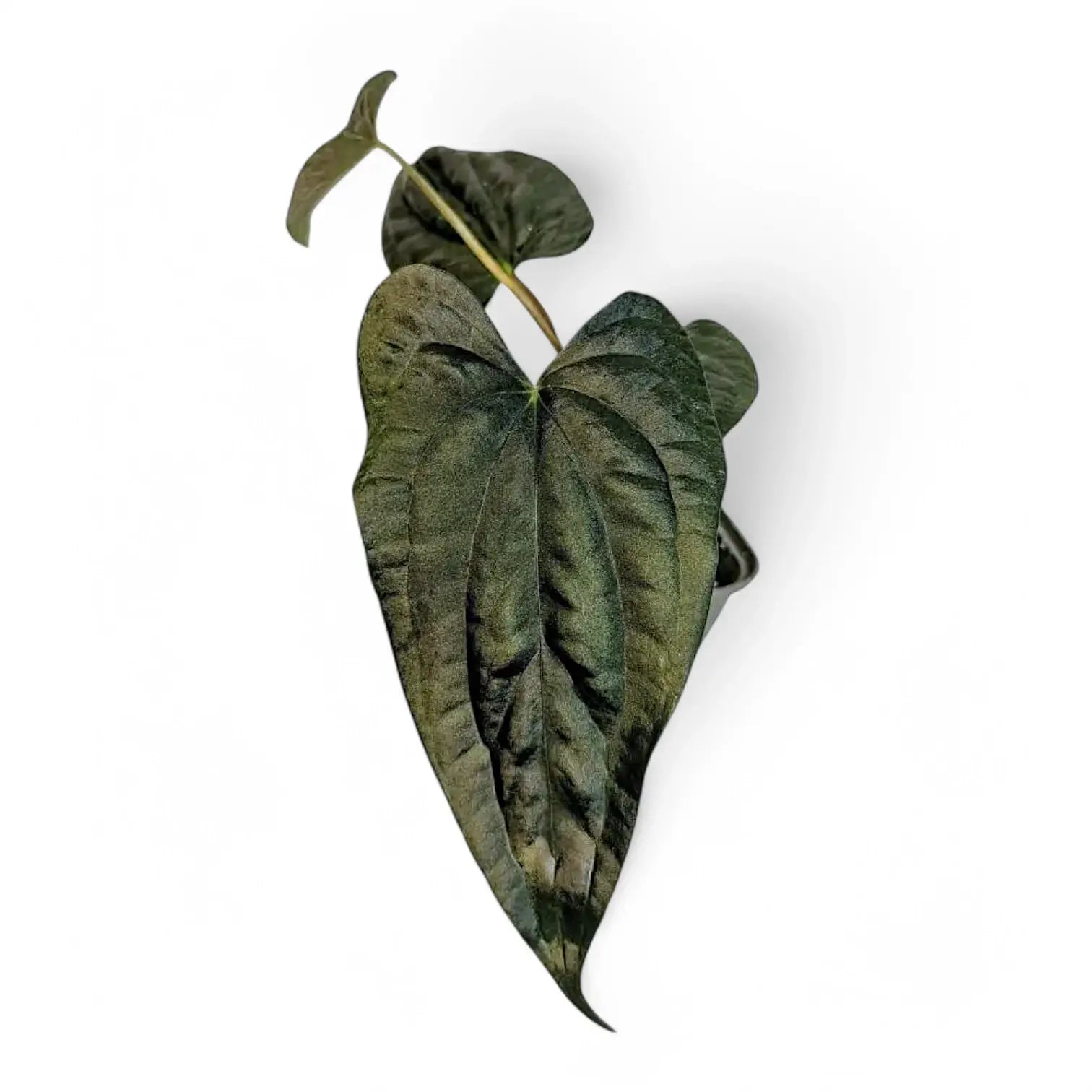
anthurium papillilaminum hybrid Anthurium papillilaminum × luxurians – Bullate Velvet CrossAnthurium papillilaminum luxurians Anthurium papillilaminum luxurians has dark leaves with raised texture and a thicker surface from the luxurians side. The blades can develop a bullate, blistered or quilted look as they mature, with a firm feel once fully hardened. New leaves need steady humidity while the textured blade expands and hardens. Once mature, the foliage combines darker colour, raised surface relief and the thick rooted growth behaviour
Anthurium papillilaminum × luxurians
Anthurium papillilaminum × luxurians has dark leaves with raised texture and a thicker surface from the luxurians side. The blades can develop a bullate, blistered or quilted look as they mature, with a firm feel once fully hardened.
New leaves need steady humidity while the textured blade expands and hardens. Once mature, the foliage combines darker colour, raised surface relief and the thick-rooted growth behaviour typical of many cultivated Anthurium hybrids.
Raised texture and leaf substance
- Textured leaf surface: The leaves can show a raised, bullate pattern influenced by Anthurium luxurians.
- Velvet influence: The hybrid can show a darker, softer leaf surface from the papillilaminum parent.
- Thicker blades: Mature leaves can feel heavier and more substantial than thinner velvet Anthurium foliage.
- Dark green colour: The foliage matures into a deep green tone with visible surface relief.
- Defined veins: Veins and texture shape the whole blade rather than sitting only as a pale surface pattern.
- Clumping base: New leaves rise from a central Anthurium crown, with thick roots below the mix surface.
Leaf texture and pot behaviour
The raised leaf surface needs stable moisture and humidity while each new blade expands. If the air is too dry, young leaves can harden unevenly, leaving creases or distorted texture. Once mature, the thicker surface gives the plant a firm, tactile look.
Anthurium papillilaminum is a velvet-leaved species from Panama, while Anthurium luxurians is a Colombian Anthurium known for its bullate leaf surface. Indoors, thick textured leaves expand best with steady humidity, filtered light and a chunky mix around the roots.
Care for Anthurium papillilaminum × luxurians
- Humidity: Higher humidity is important while new textured leaves expand and harden.
- Substrate: Use a chunky Anthurium mix that gives thick roots air while holding gentle moisture between waterings.
- Light: Give bright filtered light. Direct sun can mark the raised surface and dry the leaf margins.
- Water: Keep the mix lightly moist, allowing the top layer to begin drying before watering again.
- Air movement: Gentle airflow helps the textured leaves dry after watering while the root zone remains lightly moist.
- Temperature: Keep the plant warm and avoid cold, wet substrate around the roots.
- Feeding: Feed lightly in active growth. Strong fertiliser on a stressed root system can damage fine root tips.
Issues on textured foliage and roots
- Uneven new leaves: Dry air can make the emerging blade harden before it has fully expanded.
- Brown margins: Inconsistent moisture or a stressed root zone can brown the edge of the thick leaf surface.
- Soft roots: Dense, wet substrate can damage roots and loosen the crown.
- Scorched texture: Strong sun can leave dry patches on the raised parts of the leaf.
- Pests: Inspect the textured surface and undersides for thrips, spider mites and mealybugs, especially around new growth.
Safety for Anthurium papillilaminum × luxurians
This Anthurium contains calcium oxalate crystals. Keep it out of reach of pets and children that chew plants, and avoid touching your eyes after handling cut or damaged tissue.
Parent species and name origin
Anthurium papillilaminum × luxurians is a cultivated hybrid between Anthurium papillilaminum and Anthurium luxurians. The genus Anthurium is named from Greek roots for “flower” and “tail”, linked to the tail-like spadix. The epithet papillilaminum refers to papillae on the leaf blade, while luxurians is a Latin epithet linked to luxuriant or abundant growth.
Anthurium papillilaminum Croat was published in 1986 and is native to Panama. Anthurium luxurians Croat & R.N.Cirino was published in Aroideana in 2005 and is native to Colombia.
Shipping Notes
- Free Standard Shipping on $100+ Orders to the USA.
- Except Preorder products are shipped in 48 hours.
- Delivery to the USA:
- Standard Shipping : 3-10 business days
- If time is of the essence, please consider selecting expedited delivery for faster service.
Exchange/Return Notes
- We offer a 30-day return/exchange service after receiving.
- Final sale items are not eligible for returns or exchanges.
- To process your return/exchange, please contact us at [email protected]
- Please click here for more details>>> Return & Exchange Policy